
Introduction
There is a particular kind of confidence that comes with a well-constructed mechanistic hypothesis. A clear target. A defined pathway. A compound that engages both with measurable precision. On paper, this is what rigorous drug discovery looks like, and the oncology field has spent decades building programs around exactly this architecture.
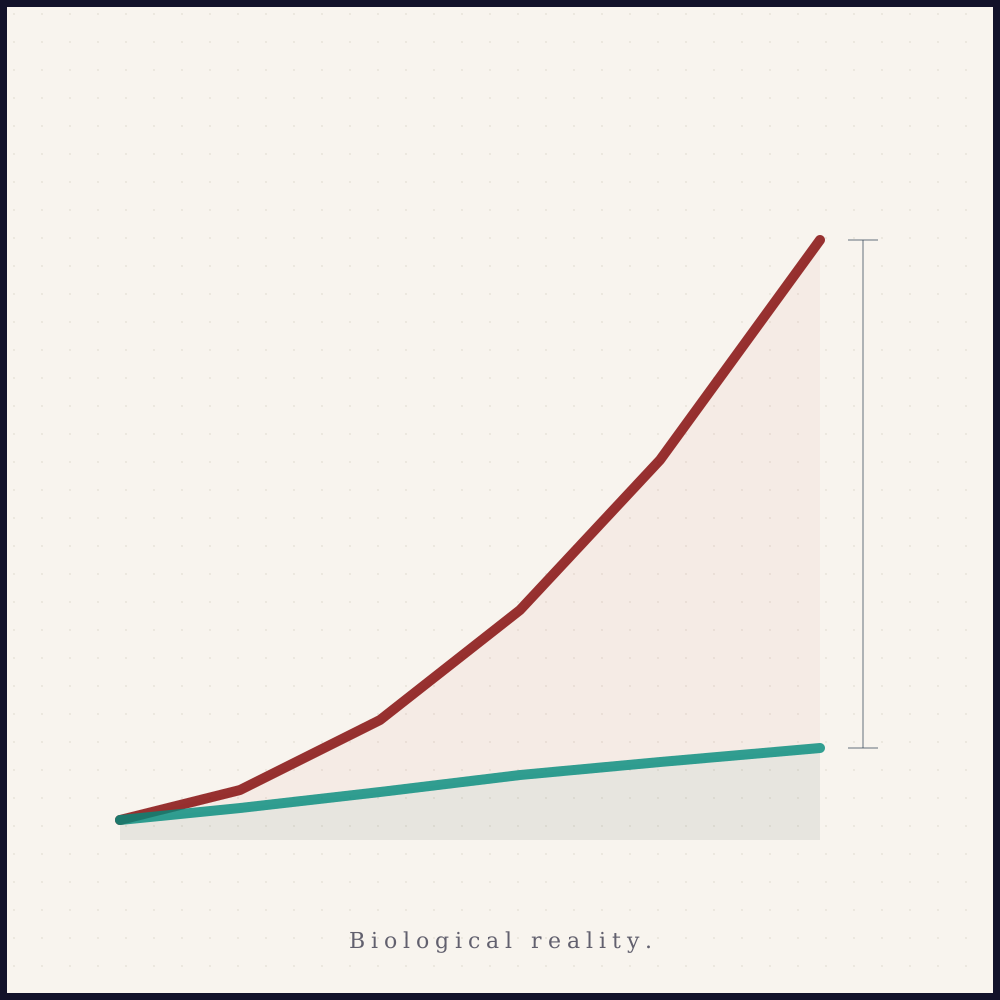
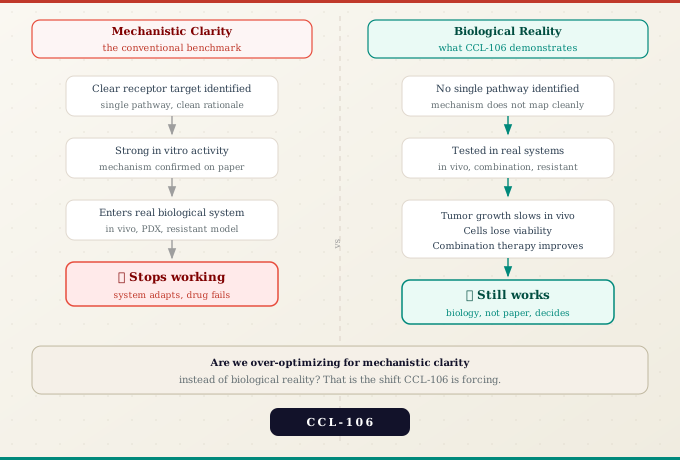
The problem is not the quality of the science. The problem is what happens when that science meets real biological systems. In vitro activity measured against homogeneous cell lines in controlled conditions is a proxy for efficacy, not a guarantee of it. When the same compound enters a living tumor with its stromal architecture, immune infiltrate, metabolic adaptations, and redundant survival signaling, the clean mechanism frequently stops working. The biology was never as clean as the paper suggested.
CCL-106 offers a different kind of case study. It does not map neatly to a single pathway. Its mechanism resists tidy categorization. And it continues to work in the systems where mechanistically tidy drugs routinely do not.
The Seductive Logic of Clean Mechanisms
The preference for mechanistic clarity in drug development is not arbitrary. Regulators want to understand what a drug does and why. Investors want a narrative that holds up in a pitch deck. Scientists want hypotheses that can be tested and falsified with discrete experiments. Clean mechanisms satisfy all of these demands simultaneously. They are easy to communicate, easy to test, and easy to fund.
This has produced a field that selects for mechanistic elegance as a proxy for clinical viability. A compound with a precise target and a documented pathway gets attention. A compound that produces real biological effects through a mechanism that does not fit neatly into existing categories gets skepticism. The implicit assumption is that if the mechanism is not understood, the activity cannot be trusted.
That assumption deserves scrutiny. The history of cancer drug development is full of compounds that were mechanistically elegant and clinically useless. It is also full of empirical observations, serendipitous findings, and data-driven pivots that produced genuine clinical benefit before the full mechanistic picture was clear. Biological reality does not wait for mechanistic consensus.
What CCL-106 Demonstrates in Real Systems
CCL-106 does not behave like a compound whose developers know exactly which node it is hitting. Tumor growth slows in vivo. Cells lose viability in vitro and in more complex model systems. Combination with chemotherapy produces outcomes better than either agent alone. These are not equivocal signals. They are consistent, reproducible results across different experimental conditions.
What is absent is a clean pathway-level explanation for why these results occur. The canonical cell death programs have been interrogated. Apoptosis blockade does not rescue the cells. Ferroptosis markers appear but without complete explanatory power. Autophagy inhibition does not alter the outcome. The compound resists the mechanistic labels that the field uses to organize and communicate biological activity.
The standard response to this situation is to treat it as a problem. If the mechanism is unclear, the reasoning goes, the results may not be real or may not translate. But this is backwards. The results in real systems are the primary data. The mechanism is the interpretation layered on top of them. When the interpretation does not fit the data, the interpretation needs revision, not the data.
The Cost of Over-Optimizing for Pathway Clarity
The oncology drug development field has a well-documented translation problem. Compounds that perform beautifully in early preclinical work fail at clinical stages at rates that have not substantially improved despite decades of investment and increasingly sophisticated target biology. One reason for this, insufficiently examined, is that the selection criteria for advancing compounds are weighted toward mechanistic properties that are easy to measure in vitro and may have little to do with biological behavior in vivo.
A compound selected for tight target binding, high potency against a defined pathway, and clean mechanistic behavior in cell lines has been optimized for conditions that do not resemble the environment it will eventually need to work in. A tumor is not a cell line. A patient is not a mouse in a controlled vivarium. The biological complexity of a real cancer is precisely what drugs need to navigate, and optimizing for mechanistic clarity in simplified systems does not prepare compounds for that navigation.
CCL-106 was not designed to have an unclear mechanism. The mechanism became unclear when it was tested in real systems and continued working in ways that single-pathway hypotheses could not fully explain. That is not a failure of the compound. It is evidence that the compound is engaging with something in the biology of PDAC that is more fundamental than a single node or pathway.
Biological Reality as the True Benchmark
The question being explored through the CCL-106 program is not whether clean mechanisms are valuable. They are, when they reflect what is actually happening in the biology rather than what is convenient to measure. The question is whether the field has allowed the preference for mechanistic clarity to become a filter that excludes compounds whose biological behavior does not fit the dominant narrative framework.
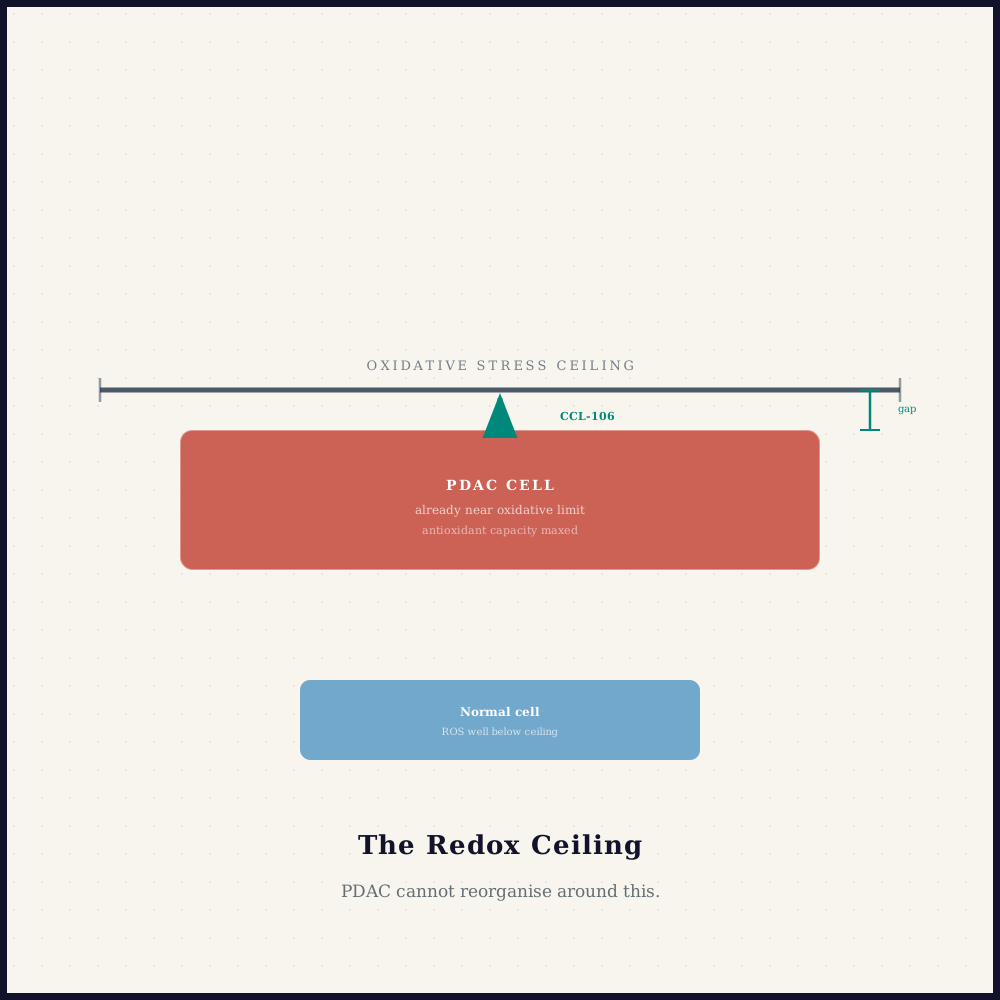
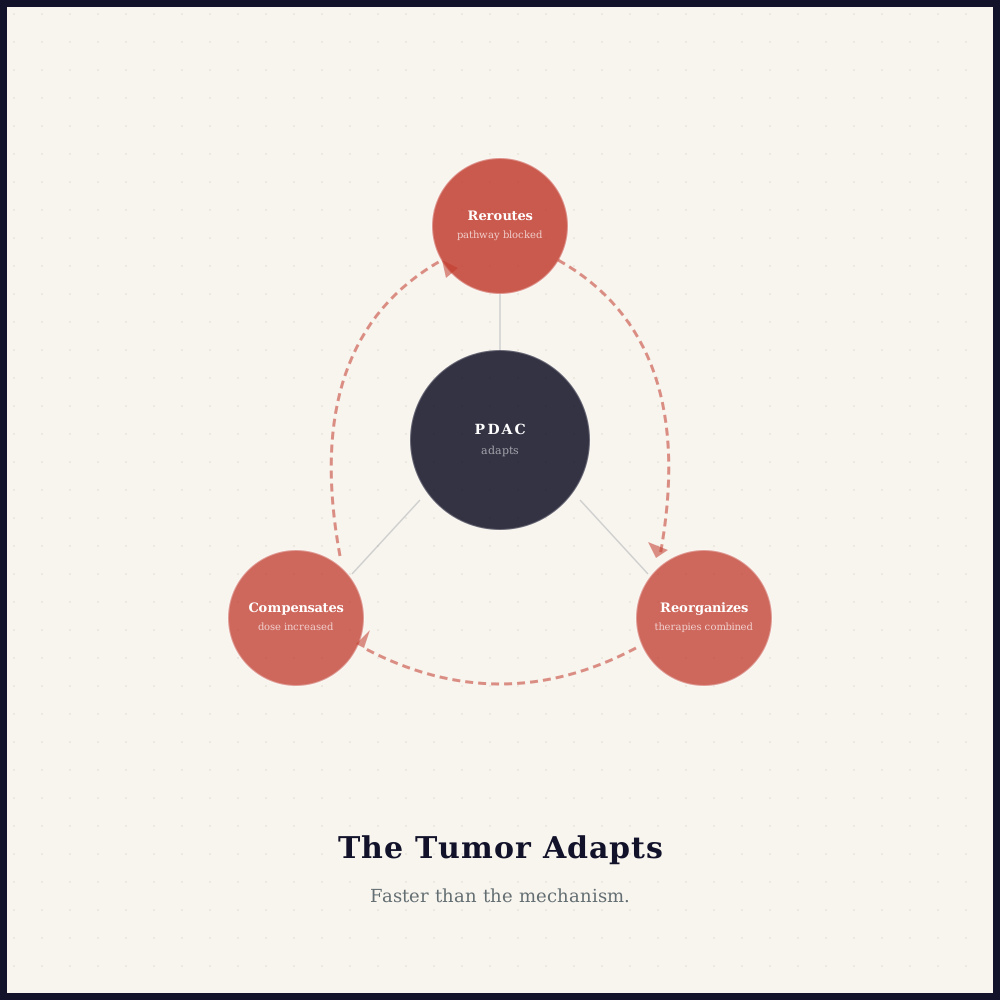
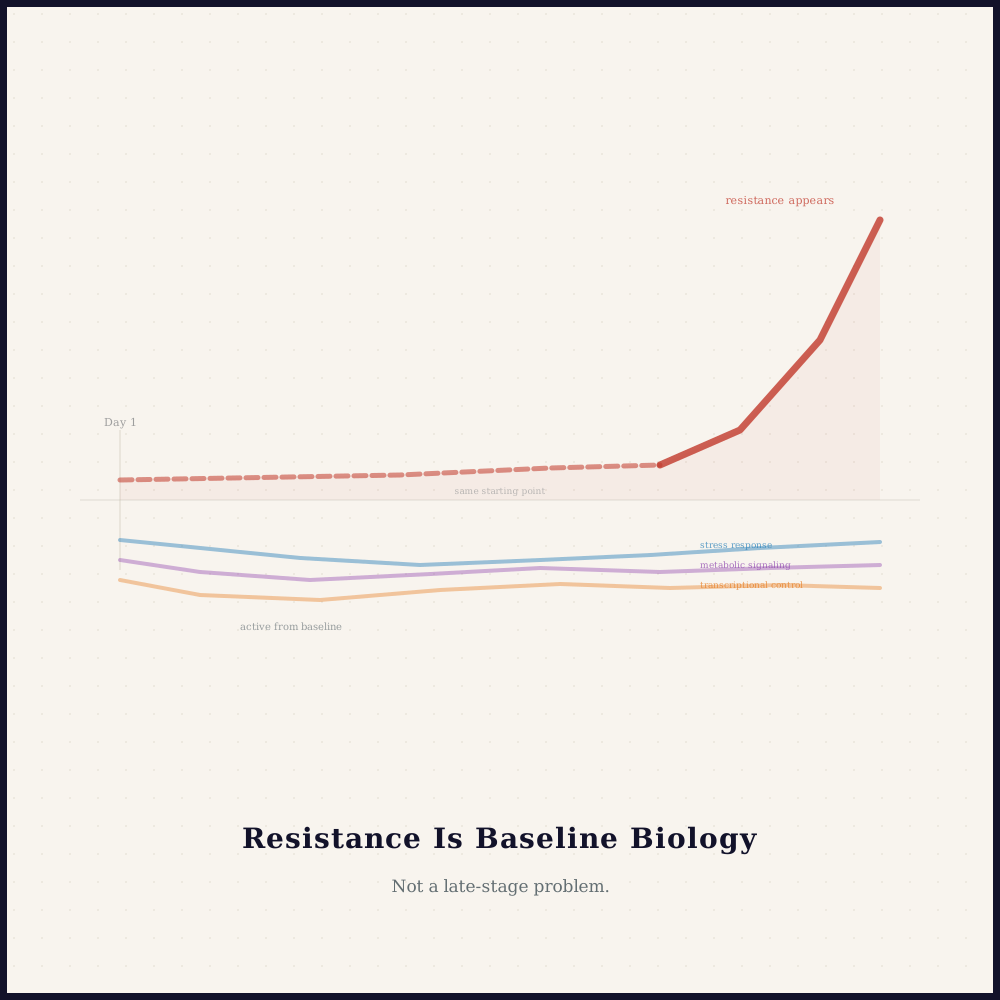
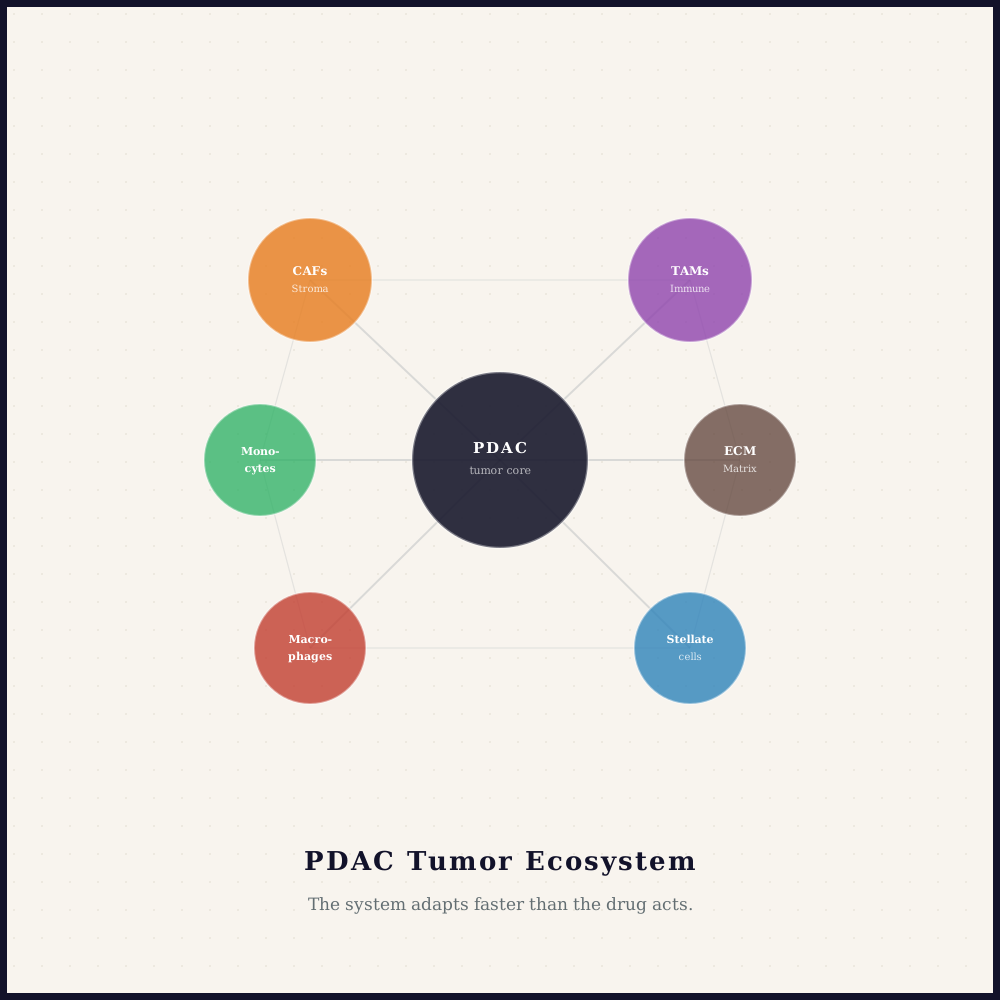
PDAC is a disease that has defeated mechanistically clean drugs for decades. Its redundant signaling architecture, its adaptive metabolic capacity, and its hostile tumor microenvironment are precisely the properties that single-pathway inhibitors cannot overcome. A compound that works in this environment despite an unclear mechanism is not a scientific problem. It is a scientific question worth following.
The shift being explored is from mechanistic clarity as the primary benchmark toward biological reality as the organizing principle. What matters is what happens in living systems, in resistant models, in combination with existing therapies, and across conditions that approximate the complexity of human disease. CCL-106 produces the right answers in those conditions. Understanding precisely why it does so is a worthy scientific goal. But it is secondary to the fact that it does.
Conclusion
Most drugs look clean on paper and stop working in biology. CCL-106 does not fit the standard mechanistic categories and continues working in real systems. The lesson is not that mechanism does not matter. It is that biological performance in real systems is the primary evidence, and mechanistic interpretation should follow the data rather than precede it. The field may be over-optimizing for clarity at the cost of compounds that engage with biological reality at a level that clean pathway diagrams cannot fully capture. That is the shift worth exploring, and CCL-106 is one concrete reason to explore it seriously.