

Introduction
Purification is one of the most misunderstood aspects of chemical development. In textbooks and early laboratory training, techniques are often presented as distinct tools with clear advantages. In real research and manufacturing environments, purification is rarely about selecting an ideal method. Instead, it is about choosing the option that performs acceptably under a specific set of constraints.
Every purification technique carries tradeoffs related to yield, time, cost, robustness, and operational risk. What works well in one context can become a liability in another. Understanding purification as a decision framework rather than a preference driven choice is essential for chemists working beyond exploratory research.
Why No Purification Method Is Universally Superior
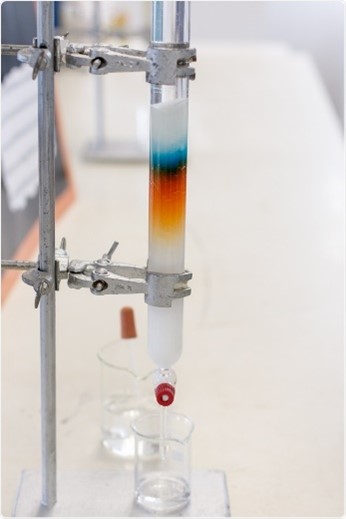
Each purification approach excels only within certain boundaries. Manual column chromatography offers flexibility and rapid method development, making it attractive in early research. However, as material quantities increase, manual operation becomes time intensive and inconsistent.
Flash chromatography accelerates separations and improves reproducibility, but solvent consumption rises quickly. At larger volumes, solvent cost and waste handling often outweigh speed advantages. Crystallization is often viewed as a clean and elegant solution, yet it depends heavily on solid state behavior. Polymorphism, filtration challenges, and particle size control can transform an attractive option into a fragile one.
Large scale column systems provide strong resolving power, but they introduce throughput limitations and equipment complexity. Each method appears effective until it encounters the constraint it handles least well.
Purification Decisions Are Driven by Constraints
Purification success is defined by alignment with process constraints rather than technical elegance. Yield requirements determine how much loss is acceptable. Time constraints influence whether slow operations can be tolerated. Cost considerations include not only materials but also labor, solvent recovery, and downtime. Failure tolerance defines how often a step can misbehave before it becomes unacceptable.
A method that maximizes purity but delays production may be less desirable than one that delivers slightly lower purity reliably. Process chemistry prioritizes repeatability and predictability over ideal outcomes. The best decision is often the one that minimizes overall risk rather than maximizes performance in a single dimension.
The Difference Between Reaction Chemistry and Process Chemistry
Reaction chemistry focuses on making molecules. Process chemistry focuses on making decisions. A strong reaction pathway is only valuable if it can be paired with a purification strategy that scales and remains stable under real operating conditions.
This is where compromise becomes a skill. Selecting a purification method means balancing conflicting objectives and accepting imperfection. Experienced process chemists evaluate not only how a method performs on its best day, but how it behaves when conditions drift, equipment ages, or operators change.
Conclusion
Purification is not a matter of choosing the best technique. It is the art of selecting the least problematic option within the limits of yield, time, cost, and reliability. Methods fail not because they are flawed, but because they are pushed beyond what they handle well.
Effective process chemistry recognizes that compromise is not weakness. It is discipline. By focusing on constraints rather than preferences, chemists can design purification strategies that support robust and scalable processes rather than fragile successes.