Why PDAC Cannot Adapt Around Redox Perturbation
Introduction The previous articles in this series have established a consistent picture. PDAC tumors maintain redundant survival signaling across multiple branches. When one pathway is
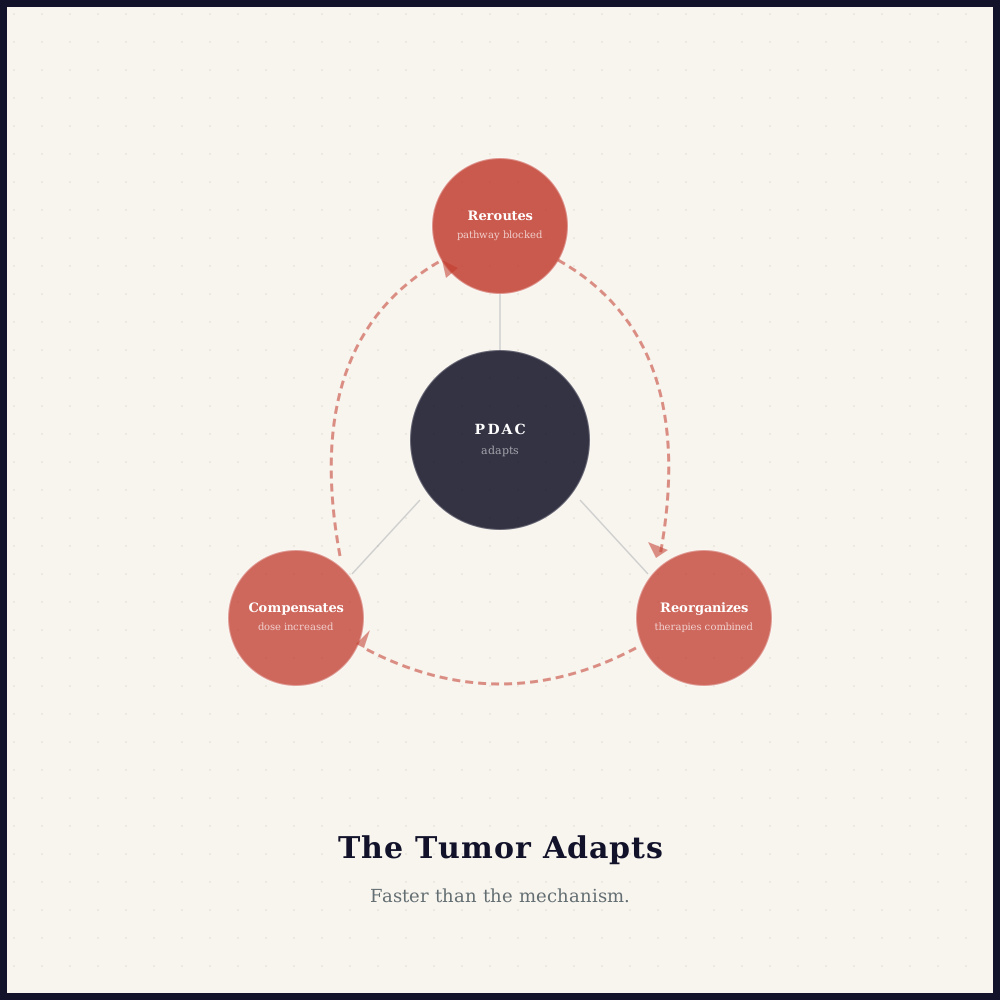
Introduction There is a recurring pattern in pancreatic cancer drug development that clinical researchers and translational scientists know well but rarely name directly. A compound
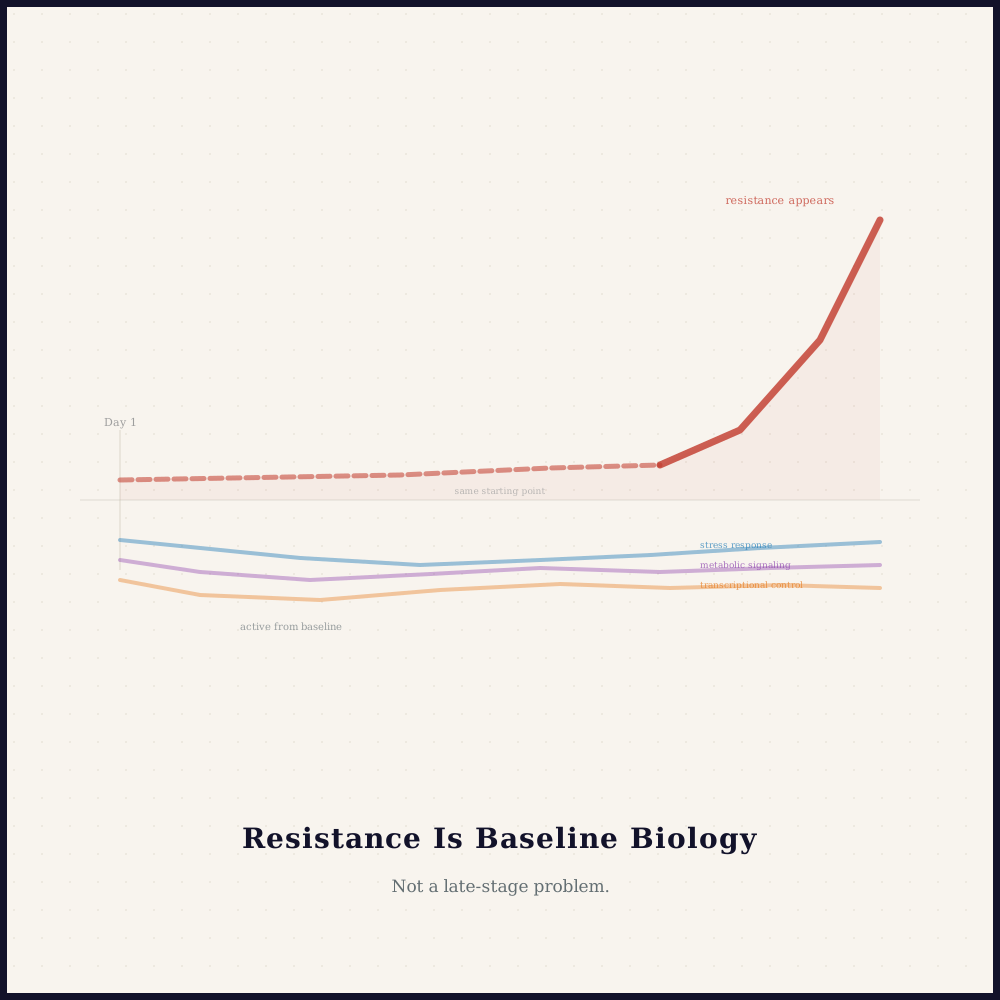
Introduction The standard model of drug resistance in oncology treats it as something that develops. A drug is administered, an initial response is observed, and
Introduction The framing that has dominated pancreatic cancer drug development for the better part of two decades positions the disease primarily as a molecular targeting
Introduction Pancreatic ductal adenocarcinoma is routinely described as one of the most treatment-resistant cancers in clinical oncology. The standard explanation focuses on biology at the
Introduction There is a particular kind of confidence that comes with a well-constructed mechanistic hypothesis. A clear target. A defined pathway. A compound that engages
Introduction In oncology drug discovery, the point at which a compound’s mechanism stops fitting neatly into a known pathway is usually the point at which
Introduction Pancreatic cancer is not failing because researchers lack targets. The field has identified KRAS, its effectors, its microenvironmental enablers, and its metabolic dependencies with
Introduction The dominant narrative in pancreatic cancer research has long positioned KRAS as the central problem. Mutated in approximately 95 percent of pancreatic ductal adenocarcinoma

Introduction For decades, pancreatic ductal adenocarcinoma has been described in shorthand as a KRAS-driven disease. This framing is scientifically accurate in the narrowest sense, KRAS