




Maximizing Throughput with Continuous Solvent Recovery Systems
In the trajectory of chemical manufacturing, there exists a critical juncture where synthesis optimization is no longer the primary driver of productivity. To achieve true industrial scale, facilities must transition toward continuous solvent recovery systems to eliminate the inherent dead time of batch processing. When solvent removal turns into a daily bottleneck, the reliance on continuous solvent recovery systems becomes a strategic necessity rather than a luxury. By implementing these automated units, operations can maintain a steady state flow, ensuring that production moves even when individual batch components require maintenance. This shift is the defining moment when chemistry decisions evolve into operations solutions, allowing for a seamless transition from laboratory success to commercial viability.
Overcoming Batch Bottlenecks with Continuous Solvent Recovery Systems
Batch evaporation relies on the discrete processing of fixed volumes, a method that is inherently discontinuous. Every cycle requires a period of loading, heating, cooling, and unloading, followed by rigorous cleaning protocols to prevent cross contamination. As production demands increase, the physical footprint and labor costs associated with multiple batch evaporators become unsustainable. Operations teams often find that despite having a perfected chemical formula, their total output is capped by the mechanical limitations of their hardware.
When solvent removal becomes a daily bottleneck, the problem is solved by continuous solvent recovery systems. These systems address throughput issues by maintaining a constant feed of material and a simultaneous discharge of both concentrated product and recovered solvent. This steady state operation eliminates the gaps typical of batch cycles, allowing for significantly higher throughput within a smaller facility footprint. The use of industrial grade equipment, such as Falling Film Evaporators, ensures that the process remains consistent over long durations, reducing the strain on vacuum pumps and ancillary hardware.
Enhancing Molecular Integrity through Predictive Stability Modeling
Scaling up evaporation is not merely about moving larger volumes; it is about maintaining molecular integrity under thermal stress. In many refinement processes, particularly those involving sensitive biological scaffolds or complex organic molecules, prolonged exposure to heat can lead to degradation. This is where predictive in silico modeling becomes a vital tool. By understanding the metabolic landscape and structural stability of a compound, researchers can predict how it will behave during the high energy environment required by continuous solvent recovery systems.
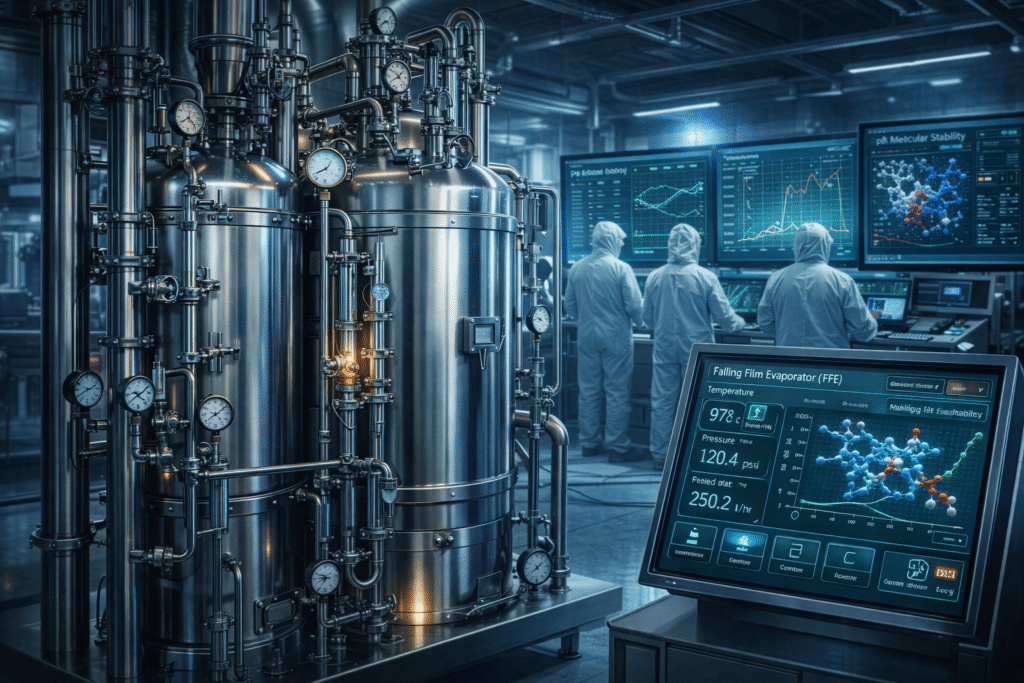
For example, using computational software to visualize protein ligand interactions and binding affinities allows teams to ensure that the final concentrated product retains its intended biological efficacy. Continuous systems are particularly advantageous because they often utilize thin film techniques, which minimize the residence time of the product at elevated temperatures. This reduction in thermal history is crucial for preventing the formation of oxidative byproducts or metabolic impurities that could compromise the safety and purity of the final chemical entity.
Strategic Implementation of Automated Recovery Infrastructure
Most production teams do not plan for the shift to continuous solvent recovery systems until they are forced into it by a failure to meet supply deadlines. However, the transition involves more than just purchasing new equipment; it requires a complete reimagining of the facility’s operational philosophy. Industrial scale evaporation units are integrated into the overall utility grid, requiring precise synchronization of vacuum, heating, and cooling systems.
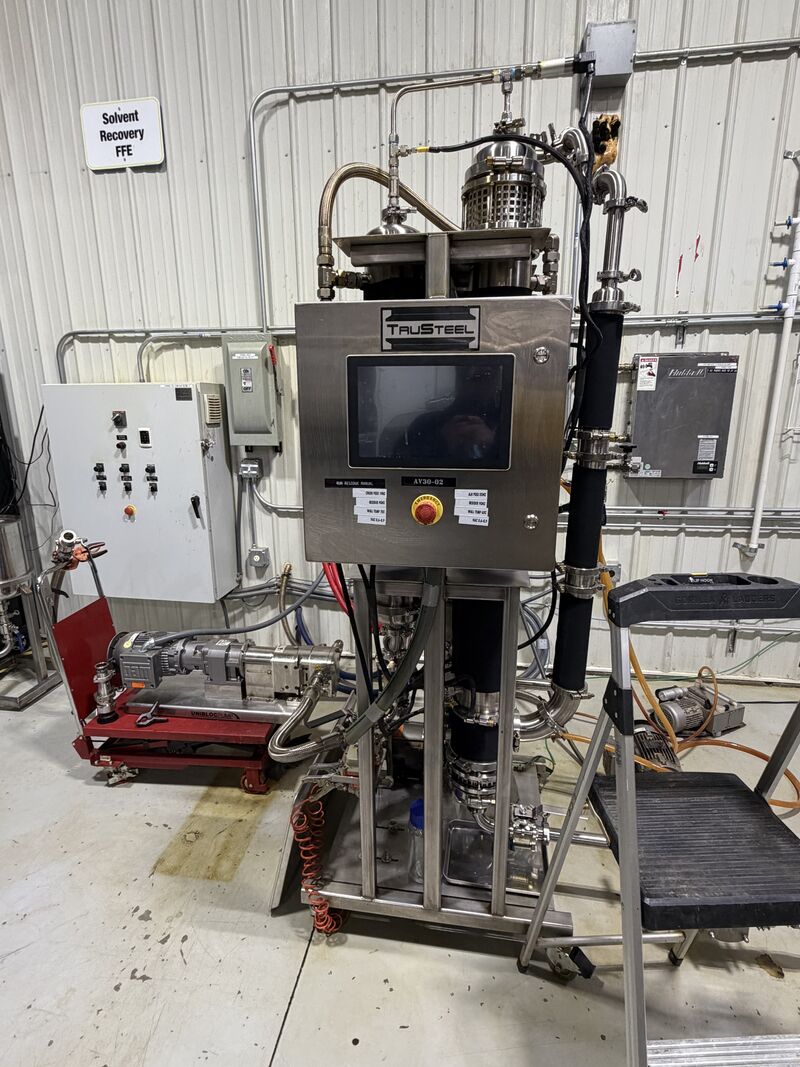
Advanced units, such as the TruSteel AV30 02, represent the intersection of automated control and high capacity throughput. These continuous solvent recovery systems are designed to handle the rigorous demands of 24/7 production, featuring localized control panels that allow technicians to monitor vacuum levels and temperature gradients in real time. By moving solvent recovery to a dedicated, automated system, a facility can redirect its human capital toward more complex tasks, such as analytical verification and further research and development, rather than the repetitive monitoring of batch cycles.
Conclusion
The evolution of a chemical enterprise is marked by the moment it outgrows the batch process mindset. The adoption of continuous solvent recovery systems is a strategic necessity for any organization aiming for global competitiveness in high throughput markets. By removing the operational bottlenecks associated with solvent removal, companies can unlock their true production potential while maintaining the highest standards of molecular purity. As predictive tools continue to enhance our understanding of chemical stability, the integration of these models with advanced continuous solvent recovery systems will define the next generation of efficient, sustainable, and high purity chemical manufacturing.