



The Precision of Atomic Mapping: Navigating the Magnetic Landscape
In the rigorous world of pharmaceutical development and organic chemistry, the ability to “see” the framework of a molecule is paramount. Nuclear Magnetic Resonance (NMR) spectroscopy stands as the definitive method for this level of structural investigation. Unlike other analytical techniques that provide fragmented data, NMR offers a holistic view of the molecular skeleton by interacting with the nuclei of atoms such as hydrogen and carbon. As the cannabis industry transitions toward standardized medical isolates, NMR has become an essential asset for ensuring that complex cannabinoid structures are not only pure but also correctly oriented in three dimensional space. This technique provides the structural “truth” that forms the foundation of modern drug discovery and regulatory compliance.
The Physical Principles of Nuclear Spin and Chemical Shift
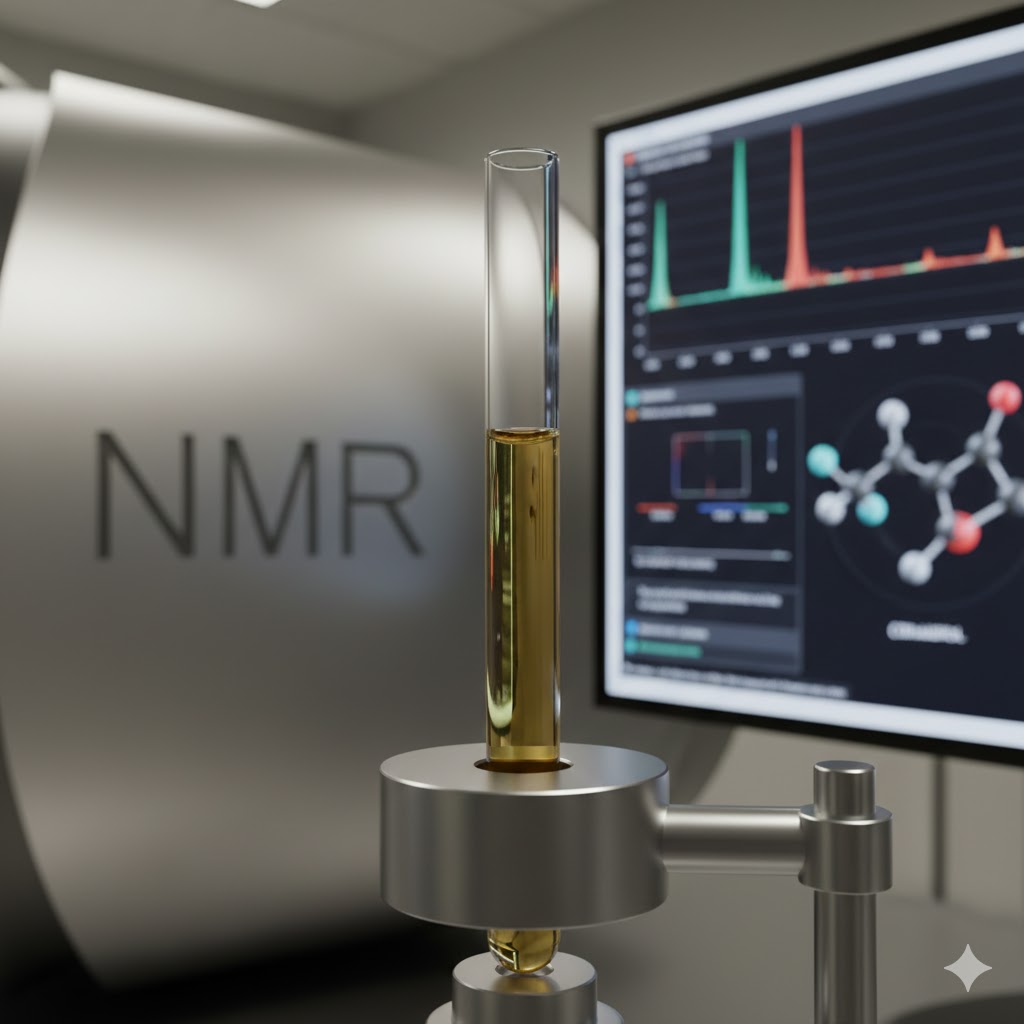
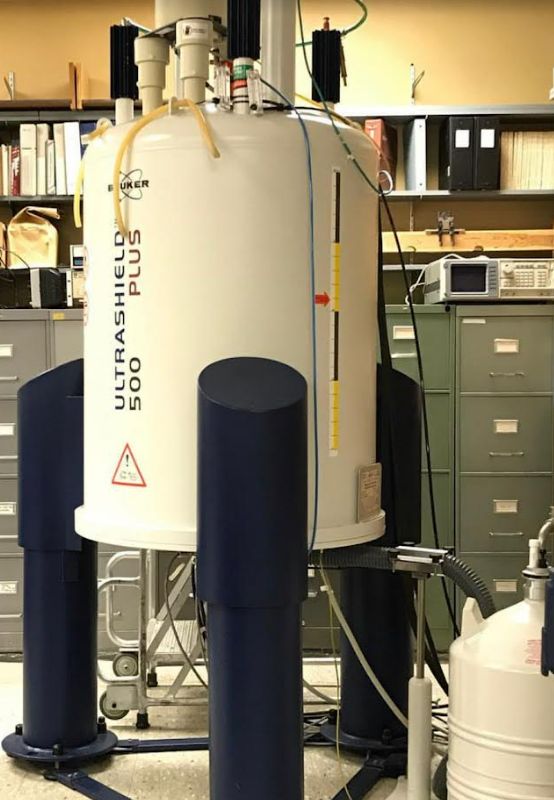
NMR spectroscopy operates on the principle that certain atomic nuclei possess a property known as spin, which causes them to act like tiny magnets. When a cannabinoid sample is placed inside a high-intensity superconducting magnet, these nuclei align themselves with the external magnetic field. A pulse of radiofrequency (RF) energy is then applied, which tips the nuclei out of alignment. As they relax back to their original state, they emit a signal that is captured by the spectrometer.
The brilliance of NMR lies in the concept of the chemical shift. Each nucleus in a molecule, such as the various hydrogen atoms in a CBD molecule, is surrounded by a cloud of electrons that “shield” it from the magnetic field. Because different chemical environments have different electron densities, each nucleus resonates at a slightly different frequency. This results in a spectrum where every peak corresponds to a specific atom in the molecular structure. By analyzing these shifts alongside coupling patterns (how neighboring atoms affect each other), chemists can reconstruct the entire atomic connectivity of an unknown cannabinoid with absolute certainty.
Quantitative Precision and Absolute Purity Assessment
While NMR is often celebrated for structural discovery, its role in quantitative analysis (qNMR) is increasingly critical for industrial quality control. Unlike many other techniques, NMR provides a signal that is directly proportional to the number of nuclei contributing to a peak. This means that with a known internal standard, a researcher can determine the absolute concentration and purity of a cannabinoid sample without needing a specific reference standard for the analyte itself.
This capability is vital for assessing the integrity of high-value isolates. NMR can detect and quantify minute levels of impurities, residual solvents, or unwanted isomers that might be missed by other forms of chromatography. For a manufacturer, this represents the highest level of purity verification. By providing a clear “fingerprint” of the sample, NMR ensures that the final product contains exactly what is intended, free from the chemical “noise” that can interfere with therapeutic efficacy or safety profiles.
Stability Monitoring and Metabolite Profiling in Vivo
The stability of a cannabinoid product is a primary concern for long-term shelf life and clinical safety. NMR spectroscopy allows researchers to monitor molecular degradation in real time. By comparing spectra over months or years, scientists can observe the subtle emergence of new peaks that indicate the breakdown of a molecule into its degradation products. This provides a deep understanding of how factors like temperature, light, and oxidation affect molecular geometry, allowing for the development of superior stabilized formulations.
Furthermore, NMR is a cornerstone of metabolomics and pharmacokinetic studies. When cannabinoids enter a biological system, they are transformed into various metabolites. NMR can be used to analyze biological fluids like blood or urine to identify these metabolic footprints. This helps researchers map the pathways through which the body processes cannabinoids, offering insights into bioavailability and the duration of action. For drug developers, this data is essential for navigating the complexities of human clinical trials and establishing safe, effective dosing protocols.
Conclusion
Nuclear Magnetic Resonance spectroscopy represents the gold standard of analytical depth in cannabinoid science. Its unique ability to provide detailed structural, quantitative, and metabolic data makes it an irreplaceable tool for the modern laboratory. As the industry moves beyond raw extracts toward designer molecules and targeted therapies, the precision of NMR will continue to drive innovation. By mastering the magnetic resonance of these complex plant compounds, researchers ensure that the future of cannabinoid medicine is built on a foundation of total molecular clarity and pharmaceutical integrity.