


Deciphering Molecular Handedness Through Optical Activity
In the complex landscape of analytical chemistry, the ability to distinguish between mirror-image molecules is not merely a technical requirement but a pharmaceutical necessity. Polarimetry stands as a fundamental technique for assessing optically active substances—molecules that possess the unique physical property of rotating the plane of polarized light. While the cannabis industry has historically relied heavily on mass spectrometry and liquid chromatography, the shift toward pharmaceutical-grade isolates has renewed interest in polarimetric analysis. This method provides a direct, non-destructive window into the enantiomeric purity and concentration of chiral compounds, ensuring that the molecular “handedness” of a product aligns with its intended biological activity.
Fundamental Principles of Optical Rotation and Specific Rotation
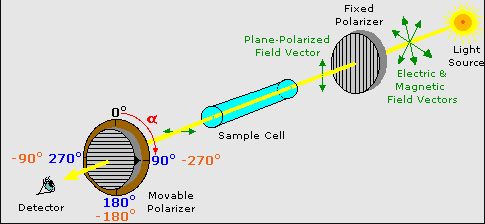
The core mechanism of polarimetry is based on the interaction between electromagnetic waves and the spatial arrangement of atoms within a chiral molecule. When monochromatic light is passed through a polarizing filter, it emerges as plane-polarized light, vibrating in a single geometric plane. As this light traverses a sample containing chiral molecules, the electromagnetic field interacts with the asymmetric electron density of the substance, causing the plane of vibration to rotate either clockwise (dextrorotatory) or counter-clockwise (levorotatory).
The extent of this rotation is quantified as the specific rotation, denoted by the symbol [alpha]. This value is a standardized physical constant for a given chiral compound under specific conditions of temperature, wavelength, and solvent. The relationship is mathematically expressed as:
alpha = [alpha] x c x l
In this equation:
- alpha represents the observed rotation.
- [alpha] is the specific rotation of the compound.
- c is the concentration in grams per milliliter.
- l is the path length in decimeters.
For laboratory scientists, this formula allows for the back-calculation of concentration with high precision, provided the specific rotation of the target cannabinoid is known.
The Architecture of the Modern Polarimeter
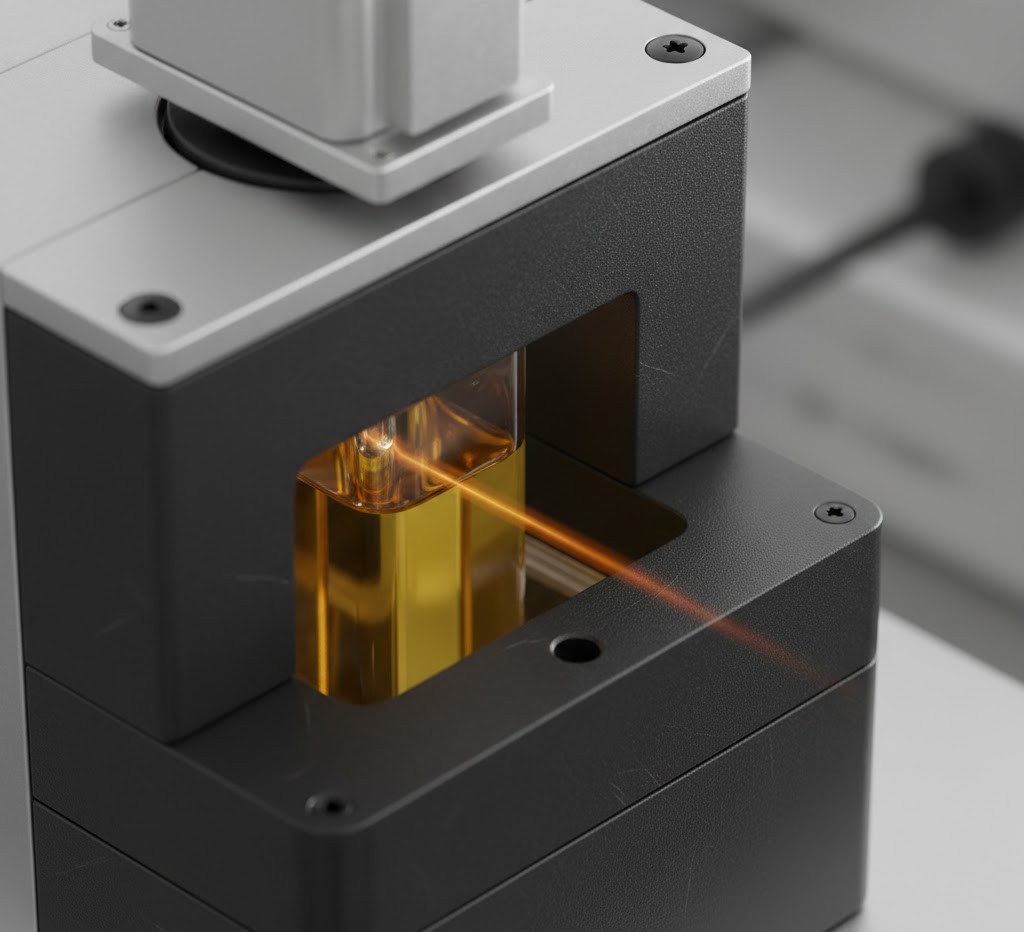
A high-precision polarimeter is an intricate assembly of optical components designed to detect minute angular shifts in light. The process begins with a light source, typically a sodium vapor lamp emitting the D-line at 589 nanometers. This light passes through a fixed polarizer, which ensures all entering waves are uniform in their orientation. The light then enters the sample cell, a tube of known length containing the dissolved cannabinoid extract.
Upon exiting the sample, the light encounters a second rotatable polarizing filter known as the analyzer. By rotating the analyzer until the light intensity is minimized or balanced, the operator can determine the exact angle of rotation caused by the sample. Modern digital polarimeters utilize Faraday modulation and electronic detectors to achieve accuracies of up to +/- 0.001 degrees, a level of sensitivity essential for identifying subtle impurities in pharmaceutical precursors.
Assessing Enantiomeric Purity and Cannabinoid Quality Control
The therapeutic efficacy of cannabinoids is intrinsically linked to their stereochemistry. For example, naturally occurring Delta-9 THC exists primarily as the (-)-trans isomer. Synthetic or semi-synthetic processes can sometimes result in racemic mixtures containing both enantiomers. Because enantiomers rotate light in opposite directions with equal magnitude, polarimetry can detect the presence of an unwanted mirror-image molecule. A sample with lower-than-expected optical rotation indicates the presence of the opposite enantiomer, a condition known as a decrease in enantiomeric excess (ee).
In the context of quality control, polarimetry serves as a rapid verification tool. For manufacturers producing high-purity CBD or THC isolates, polarimetry offers a way to confirm that the isolation process has not caused racemization—the loss of chiral integrity. While techniques like Chiral HPLC are superior for separating mixtures, polarimetry remains an invaluable “litmus test” for bulk purity, providing a quick, non-destructive check that the molecular geometry remains uncompromised.
Conclusion
Although polarimetry is often overshadowed by more modern spectroscopic methods, its role in the validation of chiral cannabinoids is irreplaceable. As the industry moves toward standardized medical treatments, the requirement for enantiomeric purity will only increase. By leveraging the physical laws of optical rotation, researchers can ensure that every molecule in a formulation is oriented correctly to interact with the human endocannabinoid system, ultimately leading to safer and more predictable therapeutic outcomes.