


Introduction
Crystallization is a foundational operation in chemistry and chemical manufacturing. It is widely used to purify compounds, control solid-state properties, and enable efficient downstream processing. Despite its apparent simplicity, crystallization often becomes problematic when processes move beyond small laboratory experiments and into larger-scale systems.
When crystallization fails occur, they are frequently attributed to poor nucleation or to molecules being inherently “difficult.” In practice, these explanations rarely address the true cause. Most crystallization challenges do not arise from molecular complexity, but from how the overall system behaves as multiple physical variables interact particularly during scale-up.
Understanding crystallization failures therefore requires shifting focus away from isolated events and toward the broader thermodynamic and kinetic environment in which crystals form, grow, and equilibrate.
Why Nucleation Is Rarely the Root Cause
Nucleation is often the first aspect examined when crystallization does not proceed as expected. While nucleation plays an important role in determining crystal number and particle size distribution, it is seldom the limiting factor in persistent crystallization failures.
In most systems, nucleation occurs readily once sufficient supersaturation is achieved. The more significant challenges tend to arise later, during crystal growth and equilibration. Even when nucleation is well controlled, crystals can behave unpredictably if surrounding conditions change more rapidly than the system can respond.
Focusing exclusively on nucleation can obscure deeper issues related to solvent behavior, temperature gradients, and mass transfer limitations. These factors often exert a greater influence on crystallization performance than the initial formation of nuclei.
The Critical Role of Phase Boundaries in Crystallization
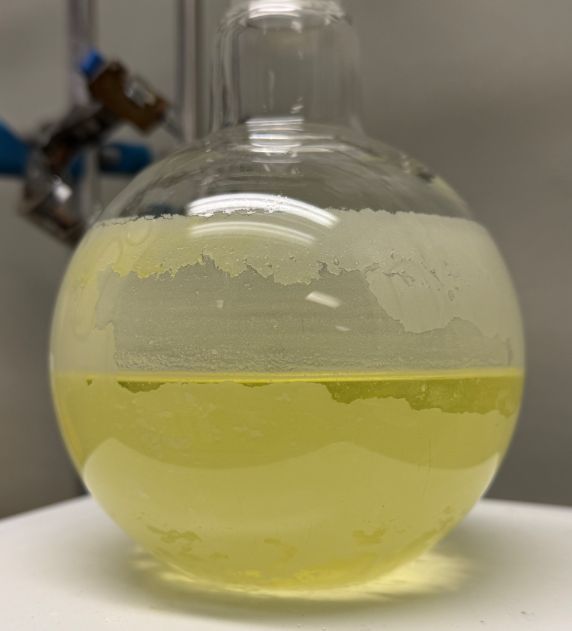
The most common point of crystallization failure lies at the phase boundary the interface where solid and liquid phases interact under changing conditions. This boundary is highly sensitive to solubility, solvent composition, and cooling rate.
Solubility is not a fixed property. It varies continuously with temperature, solvent ratios, impurity levels, and concentration. A solvent system that behaves predictably in a small laboratory vessel may perform very differently at larger scale, where heat removal is slower and mixing is less uniform.
When these variables fall out of alignment, the phase boundary becomes unstable. Crystals may partially dissolve, agglomerate, or develop irregular morphologies. These outcomes are not signs of poor chemistry; they indicate that the process is operating outside a stable thermodynamic window.
What Scale Reveals About Process Assumptions
At laboratory scale, many assumptions go untested. Temperature is often assumed to be uniform, mixing is treated as instantaneous, and solvent composition is considered homogeneous. Scaling up exposes the limitations of these assumptions.
As system size increases, thermal gradients develop, local supersaturation zones form, and solvent behavior becomes more complex. What may appear as “messy” or undesirable crystallization behavior is often valuable feedback from the system itself.
These observations highlight where process understanding is incomplete and where predictive models fail to capture real-world behavior. Ignoring these signals and attempting to force the system into compliance typically leads to repeated crystallization failures rather than long-term solutions.
Conclusion
Crystallization failures rarely originate from nucleation problems or molecular difficulty. Instead, they arise when phase boundaries become unstable due to misalignment between solubility, solvent choice, and thermal control—especially during scale-up.
Recognizing these failures as system-level feedback rather than chemical mistakes allows for more effective process development. By paying attention to phase behavior early and designing crystallization processes with scale in mind, chemists and engineers can move from reactive troubleshooting to predictive control, achieving more robust and reliable outcomes.