

Fractional purification in chemical manufacturing often emphasizes the complexity of molecular separation, but the true challenge of industrializing a process frequently lies in the mundane mechanical and operational protocols that ensure safety and survivability. While benchtop experiments focus on the success of a reaction, transitioning to production scale shifts the focus toward managing potential failure modes. One of the most critical, yet under-reported, aspects of this transition is the optimization of the order of addition. This seemingly simple procedural change can fundamentally alter the risk profile of a facility, particularly when handling hazardous or flammable materials. By prioritizing operational safety during the pilot phase, engineers ensure that high volume processes remain controllable and, ultimately, survivable.
From Benchtop Feasibility to Production Scale Survivability
The journey of a chemical process begins at the bench scale, where researchers demonstrate that a specific synthetic pathway is feasible. At this stage, the primary objective is proof of concept. However, as the volume increases to the pilot scale, the inquiry shifts toward repeatability and understanding the underlying kinetics that drive the reaction. The most significant transformation occurs at the production scale, where the primary concern is no longer just the chemistry, but the engineering required to prevent catastrophic failure.
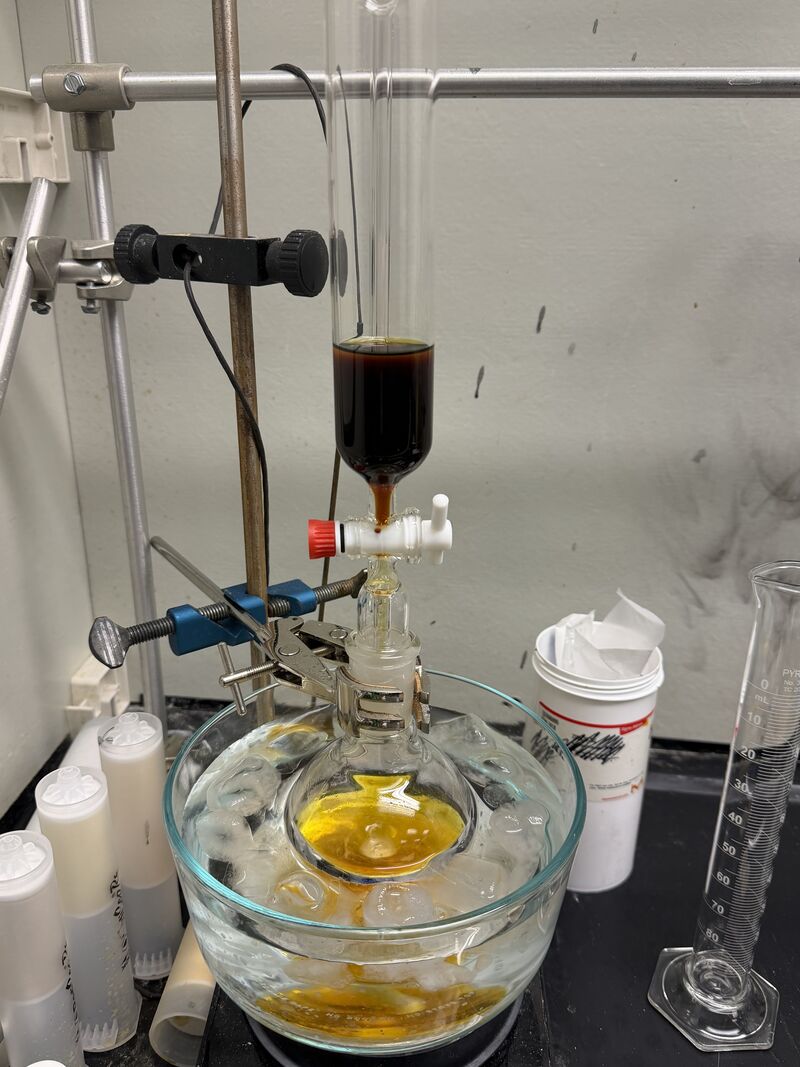
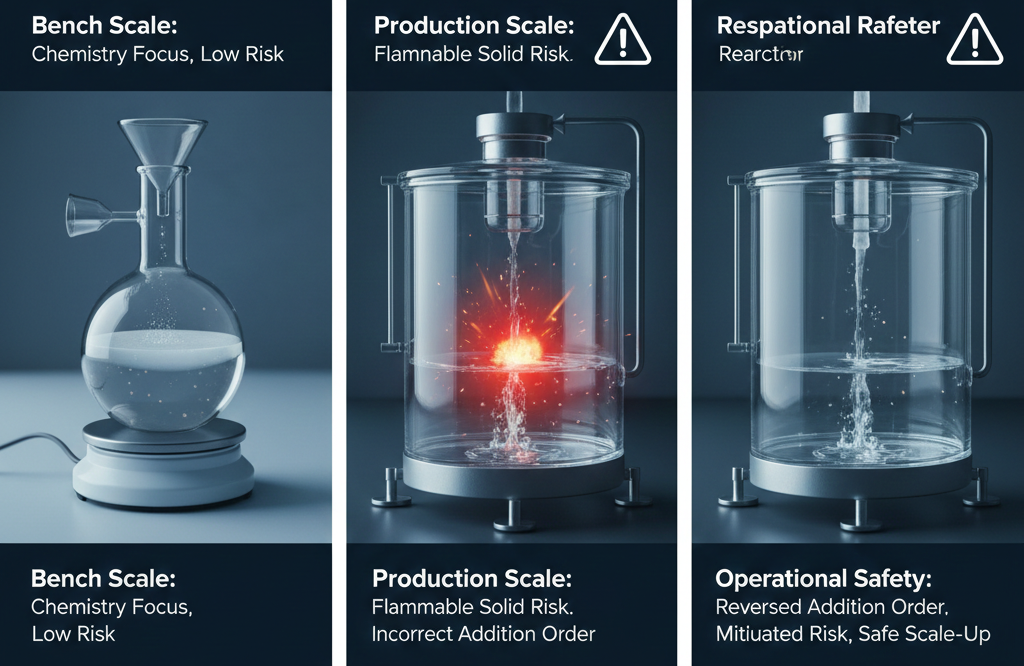
Innovation at this stage rarely involves discovering a new catalyst or a larger reactor vessel. Instead, it involves small scale experiments designed to identify how a process might fail under industrial conditions. For example, testing a reversed order of addition can mitigate the risks associated with handling flammable solids in a large scale environment. These operational refinements are rarely documented in academic papers, yet they are the essential “innovations” that prevent expensive and dangerous consequences in a commercial setting.
Managing Flammable Solids through Procedural Optimization
Handling flammable solids in an industrial reactor introduces a high degree of operational risk. At the benchtop, small quantities of such materials can be managed with standard laboratory safety protocols. At the production scale, however, the accumulation of static electricity, dust clouds, and localized heat generation can lead to explosive outcomes. Adjusting the order of addition is a strategic engineering decision used to enhance the safety profile of these high volume reactions.
By adding flammable solids to a liquid medium rather than adding liquid to a dry solid bed, engineers can ensure that the solids are immediately quenched or diluted, reducing the likelihood of ignition. This operational adjustment maintains the same chemical target while significantly lowering the risk to the facility and personnel. Achieving precision in fractional purification in chemical manufacturing requires this level of proactive risk assessment, ensuring that the intermediates are not only pure but are produced through a process that is inherently stable.
Mechanical Integrity and the Role of Automated Systems
Ensuring the survivability of a production scale process also depends on the mechanical integrity of the equipment. Automated systems, such as the TruSteel AV30 02, are designed to handle the rigorous demands of large scale chemical processing while providing real time monitoring of critical parameters. These systems allow operators to execute optimized orders of addition with high precision, minimizing the potential for human error in hazardous environments.
Strategic infrastructure, such as automated continuous solvent recovery systems, further enhances safety by managing volatile organic compounds within a closed, monitored loop. By integrating these mechanical solutions with optimized procedural protocols, facilities can protect their personnel and assets from the “quiet failures” that often plague unrefined scale up attempts. The ability to monitor vacuum levels, temperature gradients, and flow rates ensures that any deviation from the safe operating window is detected before it leads to mechanical fatigue or seal failure.
Conclusion
The successful scaling of a chemical process is defined by the transition from “what works” to “what is survivable.” Mastering fractional purification in chemical manufacturing requires a balanced focus on chemical yields and the engineering of safety. By conducting small scale experiments to optimize the order of addition and utilizing robust, automated infrastructure, industry leaders can mitigate the inherent risks of industrial manufacturing. The most impactful innovations are often those that occur before the consequences of a failure become expensive or life threatening. As the industry continues to evolve, the integration of operational risk management with advanced chemical synthesis will remain the cornerstone of safe and profitable production.