

Introduction
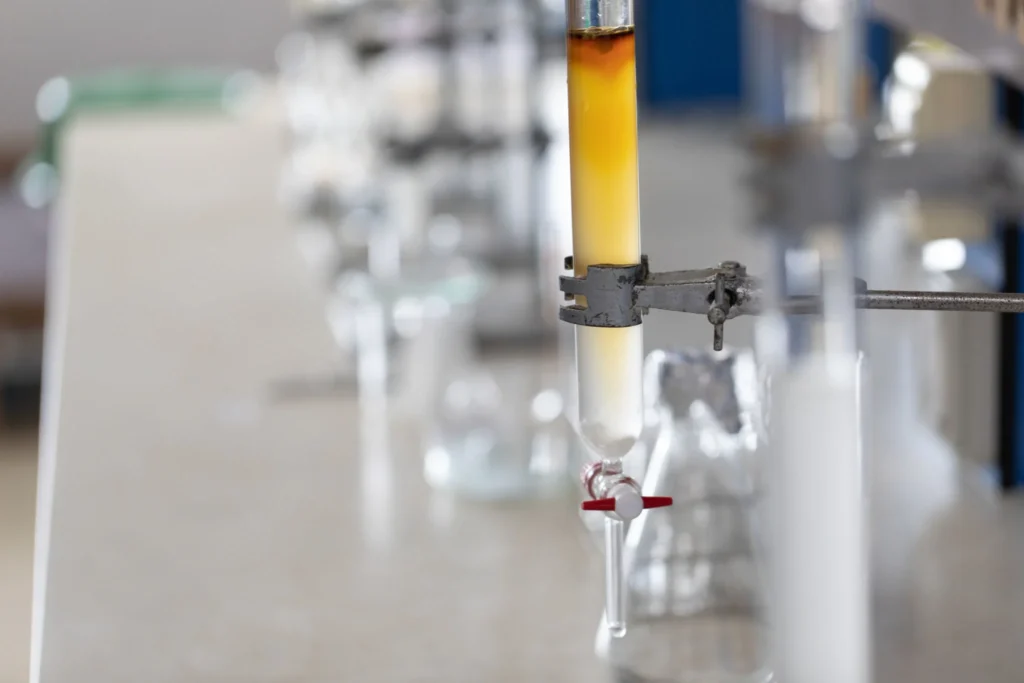
Column chromatography is one of the most familiar purification tools in laboratory chemistry. In early research settings, it often appears dependable and forgiving. A well packed column, clear solvent system, and visible separation bands give the impression that purification is under control. For many chemists, this method becomes a default solution whenever a reaction mixture looks messy.
Problems arise when this sense of reliability is mistaken for robustness. Column chromatography does not fail suddenly or mysteriously. It fails when it is asked to compensate for decisions made earlier in the process. Understanding why columns stop working is essential for researchers who want to build chemistry that remains functional beyond small scale experimentation.
Why Columns Seem Reliable at First
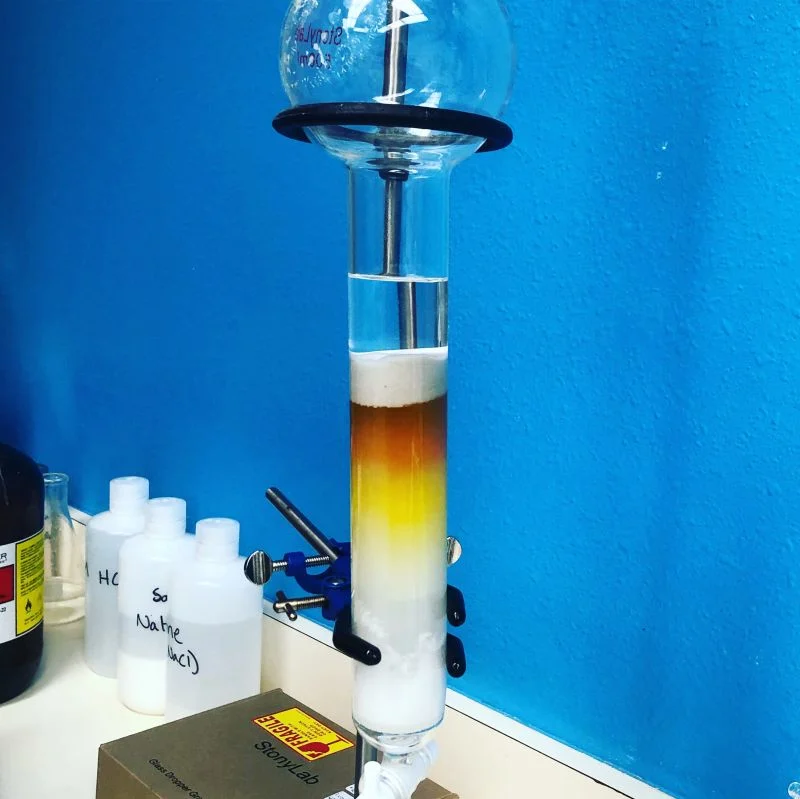
At small scale, manual columns benefit from favorable conditions. Sample loads are light, solvent volumes are generous, and time pressure is minimal. Under these circumstances, even imperfect reaction mixtures can appear to separate cleanly. Colorful bands and early fractions reinforce the belief that the method is effective.
This apparent success often hides underlying weaknesses. Resolution at the start of a run does not guarantee consistency throughout. As more material is loaded or as solvent composition drifts, separation quality can degrade rapidly. What initially looked clean may slowly transform into tailing and smearing, creating the illusion that the column itself has failed.
The Real Causes of Column Failure
Most chromatography problems are not caused by the stationary phase. Silica and other media behave predictably when used within their limits. The real issues usually originate elsewhere. Excessive loading overwhelms the separation capacity. Poor solvent selection fails to balance elution strength and selectivity. Impurities introduced upstream interact unpredictably with the stationary phase.
When these factors combine, resolution disappears. Fractions broaden, compounds overlap, and separation time increases dramatically. At this point, chemists often continue running the column out of habit, hoping the separation will recover. In reality, the column is revealing information about the process rather than offering a solution.
Why Chromatography Cannot Fix Upstream Chemistry
Chromatography is a diagnostic tool, not a repair mechanism. It can separate compounds that are reasonably distinct under the chosen conditions. It cannot compensate for reactions that generate closely related impurities, unstable intermediates, or excessive byproducts.
When a column struggles, it is signaling that the chemistry upstream needs attention. Improving reaction selectivity, reducing impurity formation, or changing solvent systems often yields greater benefits than modifying the column itself. Treating chromatography as a last line of defense leads to wasted time and inconsistent results.
Using Column Performance as Process Feedback
Experienced chemists view chromatography behavior as data. Smearing, tailing, and loss of resolution indicate that assumptions about loading capacity or solvent compatibility were incorrect. These observations provide guidance on how to redesign earlier steps to reduce purification burden.
By responding to these signals early, researchers can avoid building fragile workflows that collapse under pressure. Strong processes minimize reliance on heroic purification and instead aim for clean chemistry that separates easily.
Conclusion
Manual columns work well within limits, but they are not universal solutions. When separation quality degrades, the problem is rarely the column itself. It is a reflection of upstream choices that have not been challenged.
Chromatography does not fix chemistry. It exposes it. Recognizing this role allows chemists to move beyond repetitive purification and toward processes that are inherently cleaner, more predictable, and easier to scale.