
Introduction
In laboratory chemistry, reaction success is often judged by what happens in a flask. If a transformation proceeds cleanly at the gram scale, it is tempting to assume that the chemistry itself is sound and ready for larger application. However, experience across research laboratories and industrial facilities consistently shows that most failures do not originate in the reaction mechanism. They emerge when chemistry leaves the comfort of small-scale experimentation and enters the realities of scaled operation.
Scaling a chemical process is not simply about increasing quantities. It is a transition from a chemically dominated problem to one governed by physical constraints, operational reliability, and systems engineering. Understanding this shift is essential for anyone involved in process development, manufacturing, or applied chemical research.
Why Reactions Rarely Fail at Small Scale
At laboratory scale, chemistry benefits from conditions that are unusually forgiving. Heat generated by reactions is easily dissipated due to favorable surface-area-to-volume ratios. Mixing is often intense relative to system size, ensuring uniform concentrations and temperature. Equipment materials are inert, clean, and well understood. When problems arise, they are quickly noticed and corrected.
These conditions allow chemists to focus on reaction pathways, selectivity, and yield. However, they also mask the fact that the reaction itself is only one component of a larger process. Success at the gram or milliliter level confirms feasibility, but it does not validate robustness.
The Real Challenges Introduced by Scale
As systems grow, physical and operational factors dominate. Heat removal becomes a limiting factor, particularly for exothermic reactions. Inadequate thermal control can lead to runaway reactions or degraded product quality. Mixing efficiency declines as volume increases, creating concentration gradients that alter kinetics and selectivity.
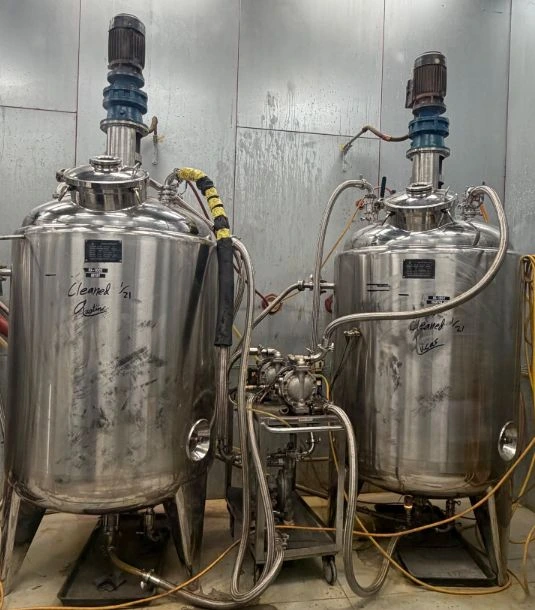
Materials of construction introduce new variables. Metals, seals, and coatings may interact with reagents in ways that glassware never did. Cleaning and turnaround time become critical, especially in multiproduct facilities where downtime directly affects productivity. Equipment reliability also becomes a concern; failures often occur under non-ideal conditions, such as during overnight operation when response time is limited.
These issues are not secondary to chemistry-they define whether chemistry can be practiced reliably at scale.
Why “Works on 10 g” Lacks Meaning Without Context
A successful small-scale experiment provides limited information unless its conditions are fully understood and challenged. Without data on heat generation, mixing sensitivity, impurity tolerance, and equipment compatibility, scale-up becomes an exercise in assumption. Many processes fail not because the chemistry is flawed, but because critical constraints were never identified early.
Scale demands fewer assumptions, not more chemistry. It requires asking how a reaction behaves when control is imperfect, response time is slower, and systems are stressed. These questions are rarely answered by small-scale success alone.
Conclusion
Chemistry does not usually fail in the flask. It fails when untested assumptions collide with physical reality. Scaling a process is not about repeating laboratory success at larger volumes, but about understanding and managing the factors that laboratories conveniently eliminate. By treating scale as a discipline of assumption reduction rather than reaction repetition, scientists and engineers can build processes that are not only chemically sound, but operationally resilient.