




Introduction
Medicinal chemistry evolves when scientists challenge assumptions about how molecules should be built. For decades planar aromatic structures dominated early discovery programs because they were synthetically accessible and easy to modify. Over time this preference revealed limitations in biological performance particularly in complex systems where three dimensional interactions drive binding and selectivity. Modern cannabinoid research is now embracing a more spatially aware approach to molecular design.
By applying principles that favor saturated and stereochemically rich structures researchers aim to unlock deeper biological insight. This shift moves discovery beyond activity screening toward a fuller understanding of how molecular shape influences behavior inside living systems.
Why Molecular Dimensionality Matters in Cannabinoid Research
Cannabinoid receptors are embedded within complex biological membranes and interact with ligands in a highly spatial manner. Flat molecules often struggle to engage these targets with precision because they lack the conformational features required for optimal binding. Increasing three dimensional character introduces rigidity and defined geometry that can improve receptor recognition.
Dimensionality also influences solubility permeability and distribution. Molecules with richer spatial features frequently demonstrate improved interaction with biological environments leading to more predictable performance in vivo.
Fsp3 Enrichment as a Design Strategy
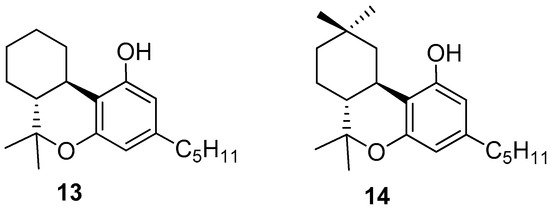
Increasing the fraction of sp3 hybridized carbon atoms has become a guiding principle in contemporary medicinal chemistry. This approach promotes saturation and stereochemical diversity without relying solely on aromatic frameworks. In cannabinoid analog development sp3 enrichment enables exploration of chemical space that was previously underrepresented.
Such molecules often display enhanced pharmacokinetic behavior including improved absorption and reduced metabolic liability. By diversifying scaffold architecture researchers gain flexibility to fine tune properties while preserving target engagement.
Implications for Stability and Intellectual Property
Beyond biological performance structural saturation carries practical advantages. Molecules with increased three dimensional complexity often resist rapid metabolic breakdown which supports longer duration of action. This stability can translate into more reliable dosing profiles and improved safety margins.
From an innovation standpoint novel architectures strengthen intellectual property positioning. Unique saturated scaffolds are more distinguishable and less prone to overlap with existing chemical space. This combination of scientific and strategic value makes dimensional design a powerful driver of progress.
Conclusion
Embracing three dimensional chemistry represents a philosophical shift as much as a technical one. In cannabinoid research it reflects a commitment to understanding rather than surface level optimization. By prioritizing molecular shape saturation and spatial interaction medicinal chemistry advances toward compounds that perform reliably in complex biological systems.
Innovation emerges when chemists design with intention and depth. Three dimensional thinking transforms cannabinoid discovery into a discipline grounded in insight precision and long term impact.