




Bridging the Gap Between Digital Prediction and Molecular Reality
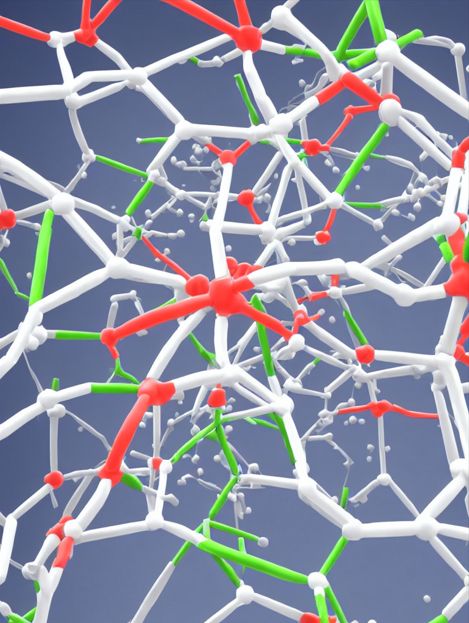
The landscape of drug discovery has transitioned from a purely bench-based experimental science to a highly integrated multidisciplinary endeavor. At the center of this transformation is the powerful synergy between medicinal chemistry and computational chemistry. While the former provides the physical proof and synthetic pathways for new therapeutics, the latter offers the predictive power to navigate the vast chemical space of potential drug candidates. This convergence is not merely a partnership of convenience; it is a fundamental shift in how we approach the design of molecules to treat complex human diseases. By combining the precision of algorithms with the reliability of laboratory synthesis, we are entering an era of faster, safer, and more targeted pharmaceutical development.
The Role of Medicinal Chemistry in Validating Molecular Hypotheses
Medicinal chemistry serves as the physical anchor of the drug discovery process. It focuses on the design, synthesis, and optimization of pharmaceutical agents that can effectively interact with biological systems. The primary driver in this field is the exploration of Structure-Activity Relationships (SAR). By systematically modifying the chemical structure of a lead compound—altering functional groups, adjusting molecular weight, or changing polarity—chemists can determine how specific atomic arrangements influence biological potency and safety.
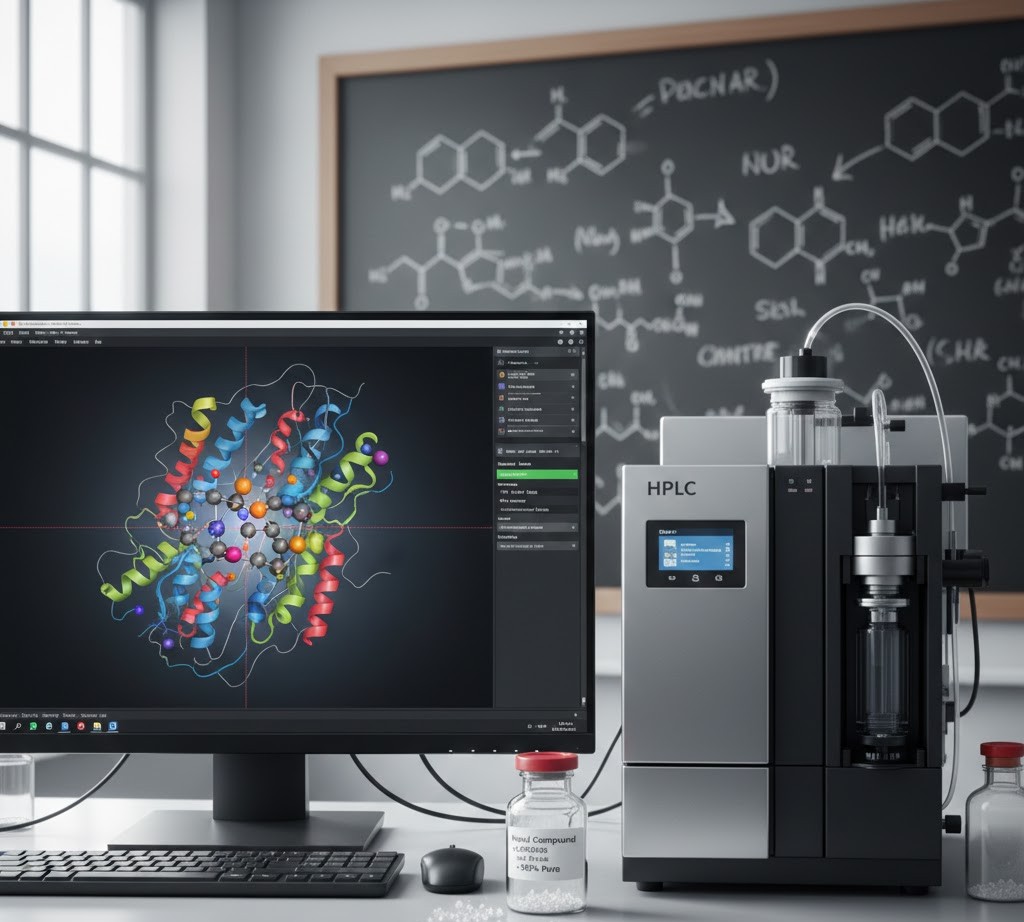
In a laboratory setting, medicinal chemistry involves rigorous purification and characterization techniques, such as High-Performance Liquid Chromatography (HPLC) and Nuclear Magnetic Resonance (NMR) spectroscopy. These processes ensure that the synthesized compounds meet the purity and structural requirements for biological testing. The insights gained from these physical experiments are essential because they provide the “ground truth” that validates or refines the theoretical models generated in earlier stages of development.
Predictive Power Through Computational Chemistry
Computational chemistry, often referred to as “In Silico” research, utilizes advanced mathematical algorithms and high-performance computing to simulate molecular behavior. Instead of synthesizing thousands of random compounds, researchers can use molecular docking to predict how a potential drug will fit into the active site of a target protein. This technique calculates the binding affinity and thermodynamic stability of the interaction, allowing scientists to prioritize only the most promising candidates for the lab.
Beyond docking, methods such as Molecular Dynamics (MD) simulations allow us to observe the movement and flexibility of molecules over time. This provides a deep understanding of how a drug-target complex behaves in a dynamic biological environment. Furthermore, Quantum Mechanics (QM) calculations offer insights into the electronic distribution and reactivity of molecules, which is crucial for understanding metabolic pathways and potential toxicity. By leveraging these digital tools, we can effectively “filter” chemical libraries, significantly reducing the high costs and time associated with failed experimental trials.
Streamlining Discovery and Optimizing Lead Compounds
The true power of this synergy lies in the iterative feedback loop between the computer and the bench. Computational models provide the roadmap, guiding medicinal chemists toward the most efficient synthetic routes and structural modifications. Conversely, the experimental data from the lab is fed back into the algorithms to improve their predictive accuracy. This cycle accelerates the lead optimization phase, moving a drug candidate from a “hit” to a “lead” with much greater efficiency.
This integrated approach also enhances molecular precision. By using computational insights to design more selective ligands, we can minimize off-target effects—situations where a drug interacts with the wrong protein and causes side effects. This level of specificity is critical in modern medicine, particularly in fields like oncology and neurology, where the therapeutic window is often narrow. The result is a drug development process that is not only faster but also focused on creating safer treatments with improved patient outcomes.
Conclusion
The intersection of medicinal and computational chemistry represents the future of therapeutic innovation. As technology continues to advance, the boundaries between experimental data and digital simulation will continue to blur. By harnessing the predictive capabilities of advanced algorithms alongside the tactical synthesis of the laboratory, we are unlocking new possibilities in healthcare that were previously unreachable. This collaborative framework ensures that the next generation of medicines will be developed with unprecedented speed, precision, and efficacy.