
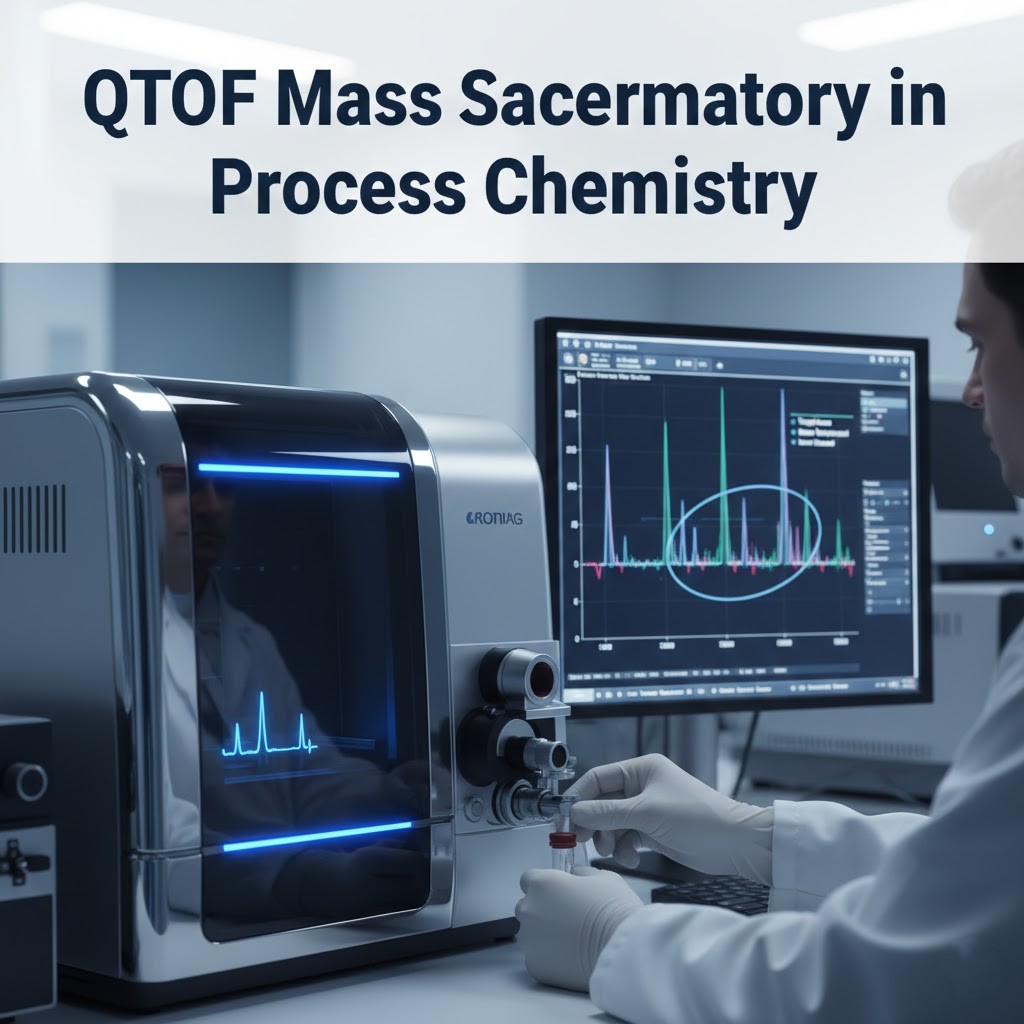
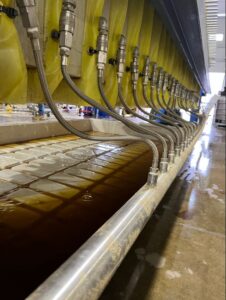


QTOF mass spectrometry in process chemistry is the definitive analytical solution for moving beyond the “pretty pure” qualitative assessments common in early-stage research. When a project transitions from the laboratory bench to industrial-scale production, the accuracy of your data becomes the primary factor in operational success. Achieving a high-fidelity purity fingerprint through QTOF mass spectrometry in process chemistry ensures that every multi-kilo campaign meets stringent specifications, identifying structural isomers and trace impurities that standard low-resolution systems inevitably miss.
Identifying Isomers with QTOF Mass Spectrometry in Process Chemistry
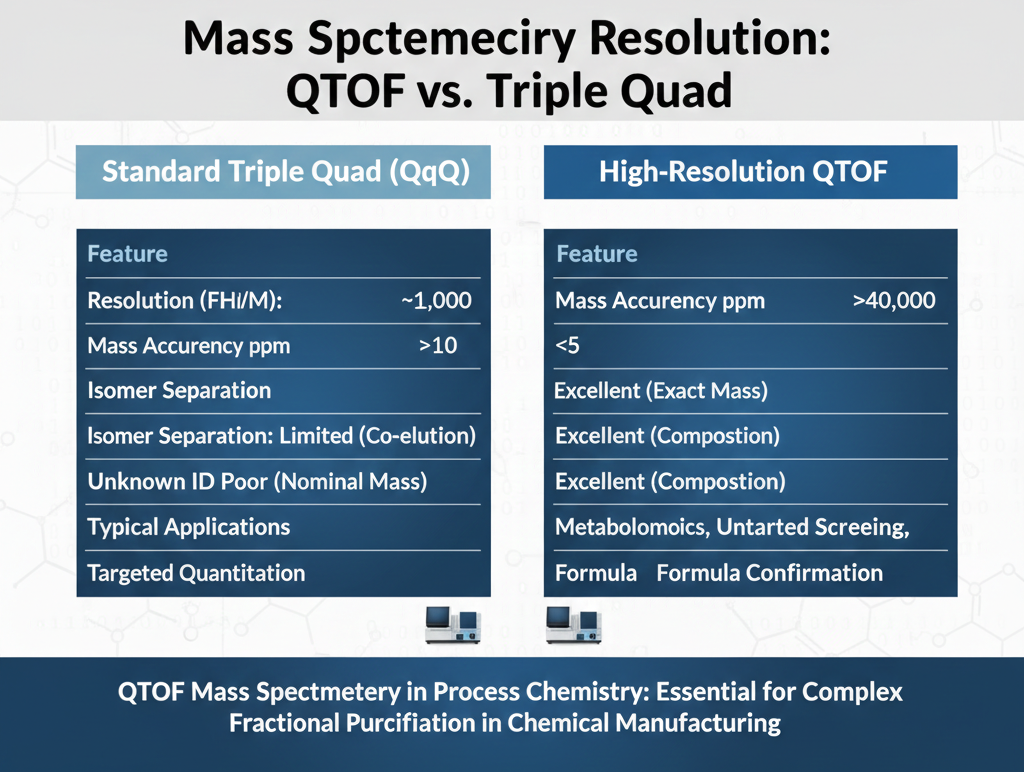
A significant challenge in fractional purification in chemical manufacturing is the presence of co-eluting isomers that appear as a single peak on standard HPLC. By utilizing QTOF mass spectrometry in process chemistry, researchers can leverage high sensitivity—often reaching detection limits of less than 0.01%—to resolve these complex molecular structures.
Unlike standard triple quadrupole systems, which provide a resolution of approximately 1,000 FWHM, QTOF mass spectrometry in process chemistry offers a resolution exceeding 40,000 FWHM. This level of precision allows for exact mass measurements (under 5 ppm mass accuracy), which is essential for confirming formulas and identifying unknowns that could catalyze unwanted side reactions during high-throughput cycles.
Real-Time Process Control and Degradation Monitoring
Effective process chemistry requires more than just knowing a reaction works; it requires knowing how it fails. The integration of QTOF mass spectrometry in process chemistry allows for the continuous monitoring of degradation pathways that are often exacerbated by the thermal stress of industrial scaling. By identifying these pathways early, facilities can adjust their mechanical parameters to protect the structural integrity of the compound.
Linking this high-resolution data with automated hardware, such as the TruSteel AV30-02, facilitates a data-driven approach to production. If QTOF mass spectrometry in process chemistry detects the emergence of an unknown byproduct, operators can immediately modulate vacuum levels or temperature gradients via the localized control interface to mitigate the issue. This synergy between analytical data and mechanical control ensures that industrial throughput remains both consistent and safe.
The Operational ROI of High-Resolution Analytics
While investing in QTOF mass spectrometry in process chemistry involves significant capital expenditure, the return on investment is found in the prevention of catastrophic operational failures. In large-scale manufacturing, a lack of data clarity can lead to the loss of entire truckloads of product due to unforeseen chemical interactions.
Utilizing QTOF mass spectrometry in process chemistry transforms the purification stage from guesswork into a disciplined engineering science. It ensures the clean recovery of high-purity filtrate, allowing valuable intermediates to move downstream without the risk of fouling sensitive equipment like Falling Film Evaporators. By mastering QTOF mass spectrometry in process chemistry, industry leaders secure their competitive position through unmatched product consistency and regulatory compliance.
Conclusion
The evolution of professional chemical manufacturing is defined by the transition from the reactor to the high-fidelity data set. The adoption of QTOF mass spectrometry in process chemistry eliminates the “silent failures” of scale by providing a complete molecular view of every batch. By prioritizing analytical certainty, facilities can ensure that their innovations reach the market with absolute purity and structural potency. In a world of high-volume production, the data provided by QTOF mass spectrometry in process chemistry is the only reality you can truly control.