




From Molecular Fragments to Pharmaceutical Integrity: The Gold Standard of Analysis
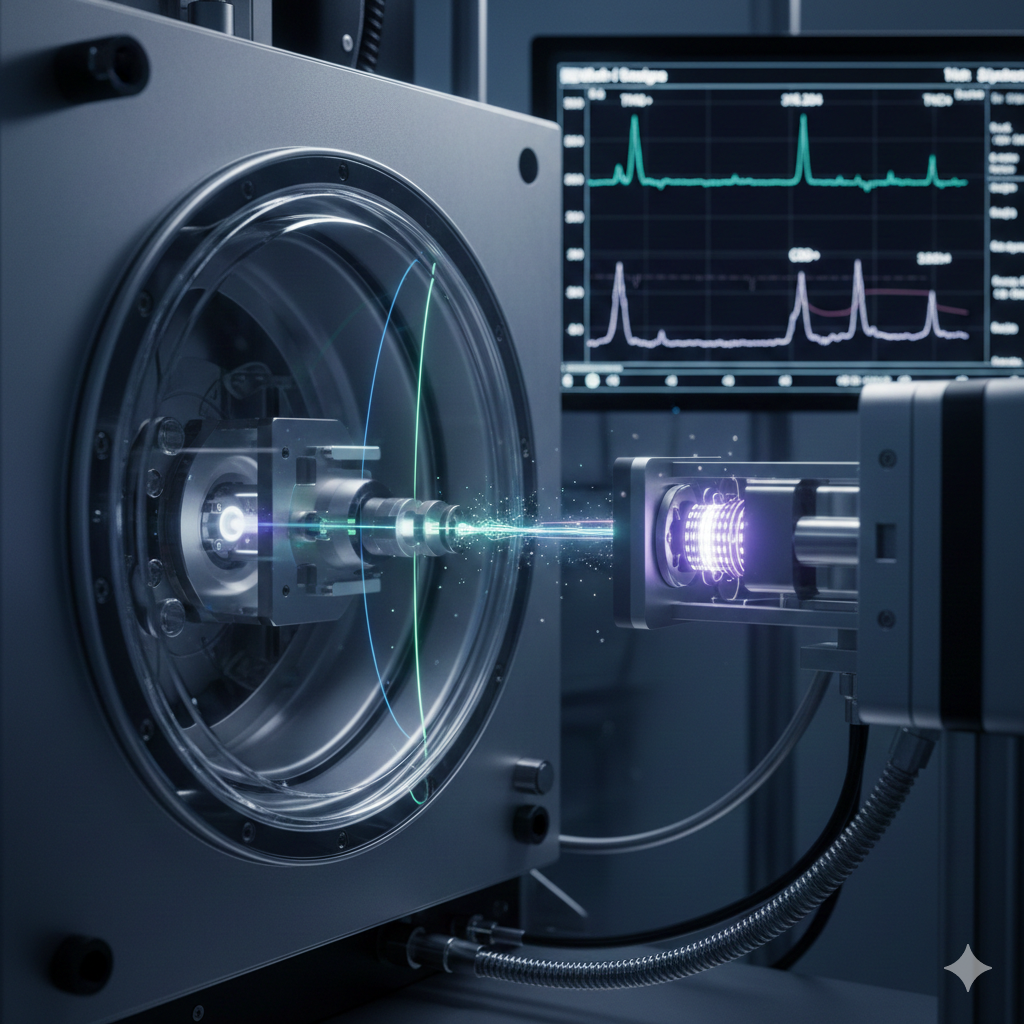
ShutterstockThe evolution of cannabinoid science from botanical exploration to pharmaceutical manufacturing has necessitated the adoption of the highest caliber of analytical instrumentation. Mass spectrometry (MS) stands at the pinnacle of this transition, providing the definitive means to identify and quantify chemical compositions with unparalleled sensitivity. By measuring the mass to charge ratio (m/z) of ionized molecules, researchers can deconstruct complex cannabis matrices into their individual molecular components. This precision is essential for meeting the stringent safety and efficacy standards required for modern therapeutic development and regulatory compliance.
The Fundamental Mechanics of Ionization and Mass Analysis
The analytical journey of a cannabinoid sample begins with ionization, where neutral molecules are converted into charged species. In the context of cannabinoid research, Electrospray Ionization (ESI) and Atmospheric Pressure Chemical Ionization (APCI) are frequently utilized due to their ability to handle the relatively non-polar nature of these compounds. These “soft” ionization techniques preserve the integrity of the molecular ion, allowing for accurate molecular weight determination before the molecule undergoes controlled fragmentation.
Once ionized, these particles are accelerated through a mass analyzer. Technologies such as the Quadrupole, Time of Flight (TOF), or Orbitrap separate ions based on the time they take to travel a specific distance or their stability within oscillating electric fields. The resulting data is processed into a mass spectrum, a digital fingerprint that plots the relative abundance of each fragment. For the laboratory scientist, this spectrum serves as a high-resolution map, revealing the presence of minor cannabinoids, terpenes, and synthetic analogs that would be invisible to less sensitive methods.

Quantitative Precision and Purity Assessment
In the production of cannabinoid-based pharmaceuticals, identifying a compound is only half the battle; one must also quantify it with extreme accuracy. Mass spectrometry, particularly when coupled with Liquid Chromatography (LC-MS), allows for advanced quantitative techniques such as Multiple Reaction Monitoring (MRM). By pre-selecting a parent ion and monitoring its transition to a specific “daughter” fragment, chemists can achieve detection limits in the parts-per-billion (ppb) range. This capability is critical for analyzing complex formulations where the active pharmaceutical ingredient must be distinguished from a sea of excipients and botanical oils.
Beyond potency, MS is the primary tool for purity assessment and contaminant screening. It allows for the simultaneous detection of pesticides, heavy metals, and residual solvents. Furthermore, it can identify degradation products that may form during the shelf life of a product. By analyzing the mass spectra of stability samples, researchers can ensure that no harmful chemical transformations have occurred, thereby maintaining the safety profile of the final formulation.
Structural Elucidation and Pharmacokinetic Profiling
Mass spectrometry plays a pivotal role in the structural elucidation of novel cannabinoids and their derivatives. Through collision-induced dissociation (CID), molecules are shattered into predictable fragments. By analyzing these fragmentation patterns, chemists can reconstruct the molecular architecture, identifying the position of functional groups and the saturation levels of the carbon backbone. This is especially vital when researching semi-synthetic cannabinoids or rare minor cannabinoids that do not yet have established reference standards.
In the clinical phase of research, MS is indispensable for metabolite profiling and pharmacokinetic studies. When cannabinoids are metabolized in vivo, they undergo various chemical changes, such as hydroxylation or glucuronidation. MS allows for the identification and quantification of these metabolites in biological fluids like blood or urine. Understanding these metabolic pathways is essential for determining the half-life, clearance rates, and biological activity of cannabinoid therapeutics, providing the data necessary for human clinical trials and physician dosing guidelines.
Conclusion
Mass spectrometry remains the definitive tool for the modern cannabinoid researcher, bridging the gap between raw botanical complexity and refined pharmaceutical precision. Its ability to provide detailed qualitative and quantitative data across a wide range of applications—from structural discovery to regulatory safety testing—makes it the cornerstone of any high-level laboratory. As the industry continues to advance toward targeted cannabinoid medicines, the mastery of mass spectrometry will remain the primary driver of innovation and consumer safety.