

Navigating the Vapor Phase: Advanced Separation for Volatile Compounds
As the analytical requirements for the cannabis industry reach pharmaceutical standards, the demand for robust and repeatable quantification methods has never been higher. Gas Chromatography with Flame Ionization Detection (GC-FID) stands as a foundational pillar in this analytical landscape. By leveraging the volatility of organic compounds, GC-FID allows researchers to separate and quantify complex mixtures with exceptional resolution. This technique is particularly vital for the characterization of volatile and semi-volatile constituents, such as neutral cannabinoids and the diverse array of terpenes that define the therapeutic profile of the plant. Through controlled vaporization and high-temperature detection, GC-FID provides a reliable data stream essential for product standardization and consumer safety.
Thermal Separation Dynamics in the Chromatographic Column
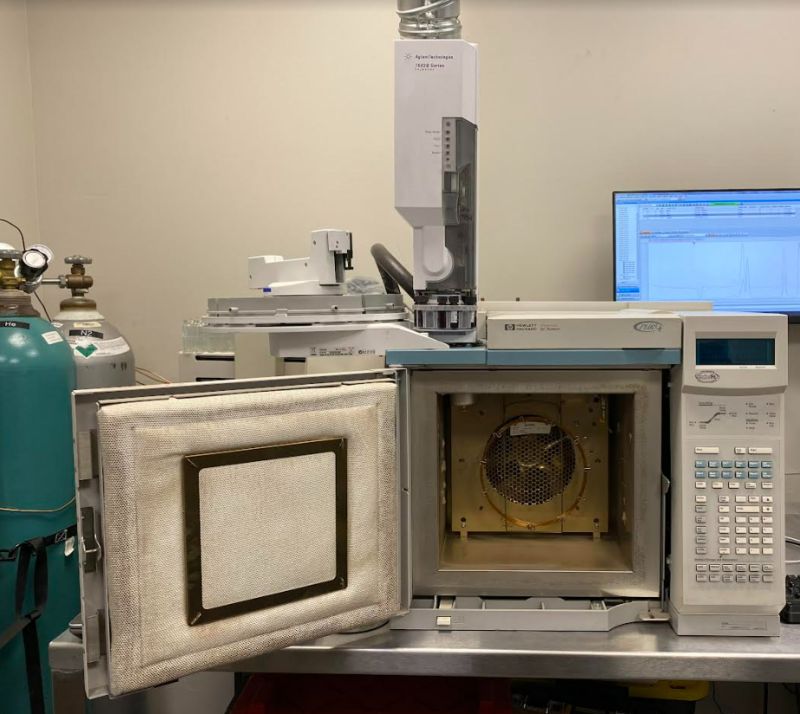
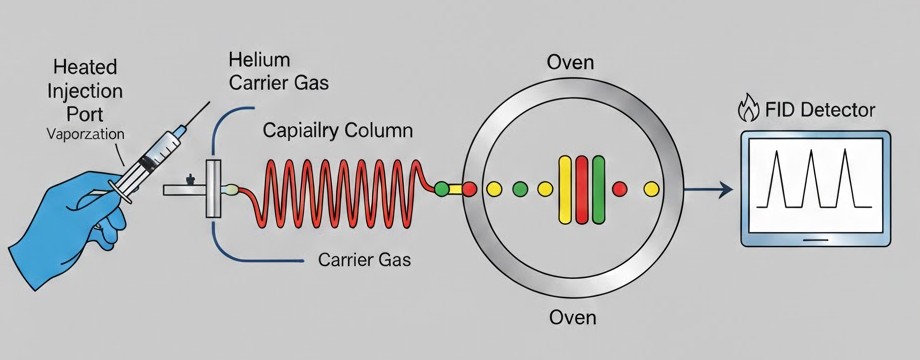
The analytical process in GC-FID begins with the rapid vaporization of the sample in a heated injection port. Once in the gas phase, the analytes are carried by an inert mobile phase—typically helium or nitrogen—into a long, narrow capillary column. This column is coated with a specialized stationary phase, and the separation occurs as the molecules interact with this coating. Unlike liquid chromatography, where solvent polarity is a primary driver, GC separation is largely influenced by the boiling point and vapor pressure of the individual compounds, alongside their affinity for the stationary phase.
Temperature programming is a critical component of this process. By precisely controlling the oven temperature over time, a chemist can optimize the elution of compounds, ensuring that low-boiling terpenes and high-boiling cannabinoids are separated clearly without overlapping peaks. This “thermal tuning” allows for the resolution of closely related isomers, which is essential when dealing with the complex chemical matrix found in cannabis distillates and whole-plant extracts. The result of this journey through the column is a stream of separated compounds entering the detector in a predictable and timed sequence.
The Mechanism of Flame Ionization Detection
The Flame Ionization Detector (FID) is widely considered the workhorse of organic analysis due to its high sensitivity and near-universal response to carbon-containing compounds. As the separated analytes elute from the column, they are introduced into a high-temperature hydrogen-air flame. Within this flame, the organic molecules undergo a combustion process that produces ions and free electrons. These charged particles are collected by an electrode, creating a small but measurable electric current.
This current is directly proportional to the number of carbon atoms entering the flame, allowing the instrument to generate a chromatogram—a visual plot of signal intensity over time. Each peak on this graph represents a unique compound, and the area integrated under each peak provides a highly accurate quantitative measure of the analyte’s concentration. One of the primary advantages of FID is its wide linear dynamic range, meaning it can accurately quantify both trace-level contaminants and high-concentration active ingredients within the same analytical run.
Quantitative Analysis and Quality Control in Cannabinoid Production
In the commercial production of cannabinoids, GC-FID is primarily utilized for the quantification of neutral cannabinoids like THC and CBD. Because the technique involves high temperatures, it naturally decarboxylates acidic cannabinoids (such as THCA) into their neutral forms during injection. While this prevents the separate measurement of acids without prior chemical derivatization, it provides an excellent measure of the “total potential” potency of a product. This is particularly useful for final-stage purity assessments of isolates and distillates where chemical stability is paramount.
Beyond potency testing, GC-FID is the gold standard for terpene profiling. Terpenes are highly volatile aromatic compounds that are often lost or degraded in other analytical processes. The high-heat environment of gas chromatography is ideal for these molecules, allowing for the precise mapping of a product’s “terpene fingerprint.” For quality control departments, this data ensures that every batch of a specific formulation maintains the same sensory and therapeutic characteristics, meeting the strict regulatory requirements for consistency in medicinal and recreational markets.
Conclusion
Gas Chromatography with Flame Ionization Detection remains an indispensable technology for the modern cannabinoid laboratory. Its ability to provide precise, repeatable, and sensitive data on volatile organic compounds makes it a cornerstone of both research and industrial quality control. As analytical methods continue to evolve, the integration of GC-FID with advanced temperature programming and column chemistry will continue to drive innovation in cannabinoid science, ensuring that manufacturers can deliver safe, effective, and accurately labeled products to a discerning global market.