

Introduction
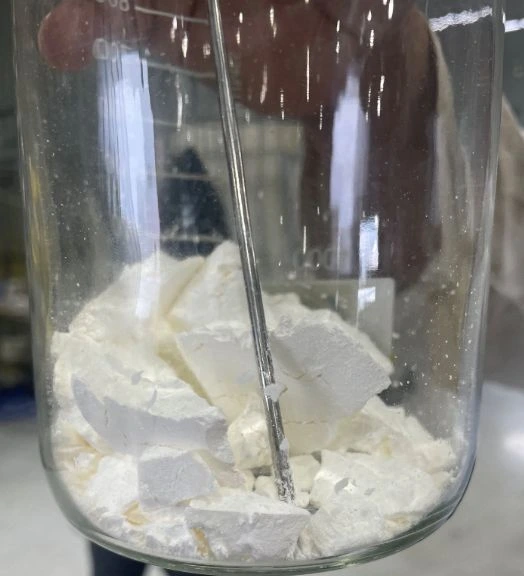
In chemistry, crystallization is often taught as a visually elegant operation—well-defined crystal faces, uniform size distribution, and a morphology that looks straight out of a textbook. In real laboratories and industrial environments, however, crystallization rarely conforms to that ideal. Instead, practitioners frequently encounter irregular solids, mixed particle sizes, and forms that would never be described as visually appealing.
This disconnect between theory and practice can create unnecessary hesitation in decision-making. Chemists may be tempted to keep refining a crystallization step in pursuit of aesthetic perfection, even when the material already meets functional requirements. In reality, crystallization is not an artistic exercise; it is a process decision governed by specifications, constraints, and downstream impact.
Why Real Crystallizations Rarely Look Textbook-Perfect
At small scale, crystallization conditions are highly controlled. Cooling rates are precise, solvent volumes are generous, and agitation is optimized for uniformity. Under these conditions, crystals can grow slowly and develop well-defined habits. This environment encourages the expectation that crystal quality should always look visually refined.
At larger or more practical scales, these conditions change. Heat transfer becomes less uniform, mixing is imperfect, and time constraints limit slow, idealized growth. The result is often irregular crystal shapes or agglomerates. Importantly, these visual imperfections do not automatically indicate a poor process. What matters is whether the solid performs its intended function in purification, isolation, and downstream handling.
Crystallization as a Decision-Making Tool, Not a Beauty Contest
The true purpose of crystallization is separation, not appearance. Each crystallization step should be evaluated against specific questions. Is the purity already within the required specification? Does the solid filter efficiently without excessive clogging or blinding? Is the particle size suitable for drying, milling, or formulation?
In many cases, additional processing—such as re-slurrying or re-crystallization—offers diminishing returns. While these steps may marginally improve appearance or purity, they also consume solvent, time, and energy. In production environments, such costs directly affect throughput and economics. Knowing when a crystallization is “good enough” is a skill rooted in understanding process priorities rather than visual cues.
The Hidden Cost of Chasing Perfect Crystals
Pursuing ideal morphology is relatively easy at laboratory scale, where constraints are minimal and failures are inexpensive. At scale, however, perfection can be costly. Extra solvent handling increases waste streams, prolonged processing raises downtime risk, and repeated solid handling can introduce variability rather than reduce it.
More importantly, excessive optimization can obscure the real objective: delivering material that meets quality and performance requirements reliably. A visually imperfect solid that filters cleanly and meets purity targets is often far superior to a beautiful crystal that complicates operations or delays production.
Conclusion
In applied chemistry and industrial processes, crystallization success is defined by constraints, not aesthetics. Irregular solids, mixed morphologies, and non-ideal appearances are often entirely acceptable outcomes. The critical skill lies in recognizing when further refinement no longer adds meaningful value.
By shifting focus from how crystals look to how they perform, chemists can make more efficient, data-driven decisions. Crystallization is complete not when it looks perfect, but when it satisfies the technical, operational, and economic requirements of the process.